Do you recognize non-toxic skincare when you see it?
There’s a quiet moment when you find yourself in front of a shelf full of promises for radiant, brightening, flawless skin. And yet, there’s this little part of you that hesitates.
Because the worry isn’t just about if it will work but also concerns what you put on your skin.
This is a new phase of beauty consciousness when we are not simply consumers anymore but careful about what goes into our bodies. And if you have ever felt overwhelmed trying to understand what is toxic and non-toxic skincare, then let’s walk through it together with honest clarity.
The Truth About Non-Toxic Skincare
Firstly, to put this into perspective, “Non-toxic skincare” is not a regulated term in the beauty industry. It is often referred to as clean, natural, or organic. However, these terms may not always refer to the same thing.
What you truly need are safer formulations made with lower-risk ingredients, not perfection.
Honestly, not every “chemical” is dangerous, and not all “natural” ingredients are safe by default. Ultimately, the goal is to make informed decisions.
Read Also: Skincare Misconceptions About Dark, Melanin-Rich Skin We’re Dumping for Good
Pay Attention to These Ingredients
You should pay attention to these ingredients when checking the labels for non-toxic skincare products.
Parabens—Parabens are the most popular preservatives for manufacturers to prevent bacterial and fungal growth in their products. The problem is that parabens can act like estrogen in the body’s cells. Hence, there are raised concerns that they could interfere with hormones. Global regulators still allow their use but in very low concentrations. Certain regions, such as the EU, have banned some kinds of parabens as a safety measure.
How does it affect you? There is no need to be worried. However, if you would like to limit the total amount of parabens in your body since they tend to be present in a lot of the products you use daily, it makes sense to go for paraben-free personal care.
Formaldehyde- While you probably won’t come across a label with the word “formaldehyde” written boldly, ingredients like DMDM hydantoin or quaternium-15 can slowly release it over time. Formaldehyde has been classified as a human carcinogen. And even long-term exposure to low doses may cause concern.
How does it affect you? Don’t only check for the well-known names, but look for their hidden ones as well.
Phthalates—These are the silent additives. Phthalates are often hidden under the label “fragrance.” They are used to make scents last longer. However, they have been associated with endocrine system disruption and reproductive risks.
How does it affect you? Going “fragrance-free” or “phthalate-free” is more than just a trend; it’s a way of being transparent.
Microplastics & environmental toxins—Microplastics are tiny pieces of plastic that pollute the environment and even pose risks to human health. Hence, globally, they are being banned and phased out of things like exfoliating beads and glitter in cosmetics.
How does it affect you? Your choices in skincare products not only contribute to your radiance but also impact the overall health of our ecosystem.
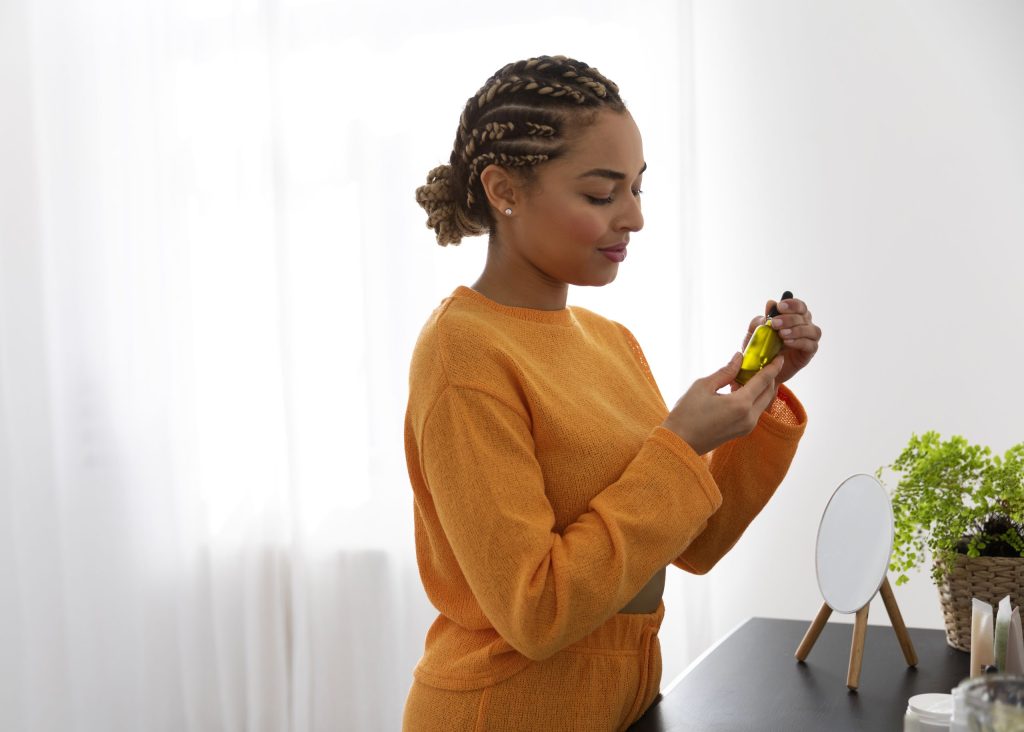
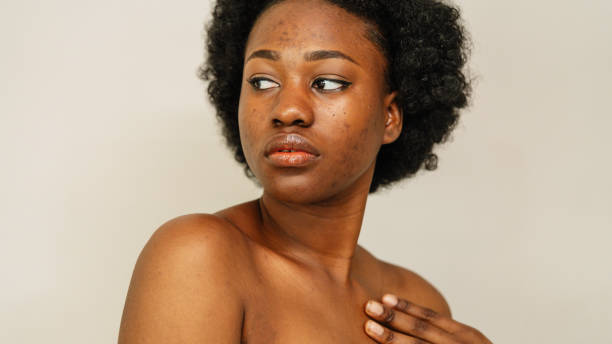
Melanin-rich skin is beautiful. However, it is also more susceptible to being irritated or becoming dry, and it is more easily hyperpigmented. The use of harsh chemicals, synthetic fragrances, and stripping ingredients can be major factors that worsen uneven skin tone or sensitivity.
This is why a good number of African women are choosing the ingredients that work for the skin, not against it. Shea butter, Baobab oil, Aloe vera, natural humectants, and plant oils are great examples.
These are simply not just skin moisturizers but also restore the skin barrier, which is a very important factor when dealing with hot, dry, or humid climates in different parts of Africa.
Next time you go shopping for non-toxic skincare products, choose brands that are transparent enough to read their ingredients, flip the bottle to read at least the first five ingredients, and do a patch test on your skin. It is imperative to know not to fall for the overly emphasized natural ingredients.
Read Also: Here’s Why You Should Never Get Skincare Products Without Reading The Ingredients
You should also understand that preservatives are necessary in non-toxic skincare products because a preservative-free cream is a breeding ground for bacteria. Preservatives are not totally bad. They just need to be safe and well-formulated.
Truthfully, you don’t need a 12-step routine. You don’t have to buy luxury products from overseas. And most certainly, you don’t have to let fear dictate your choices.
What you require is consciousness. Because whenever you pick up a non-toxic skincare product that is kind to your skin, your health, and the environment, you are not simply doing skincare; you are part of a quiet revolution.
And that is intentional beauty.