
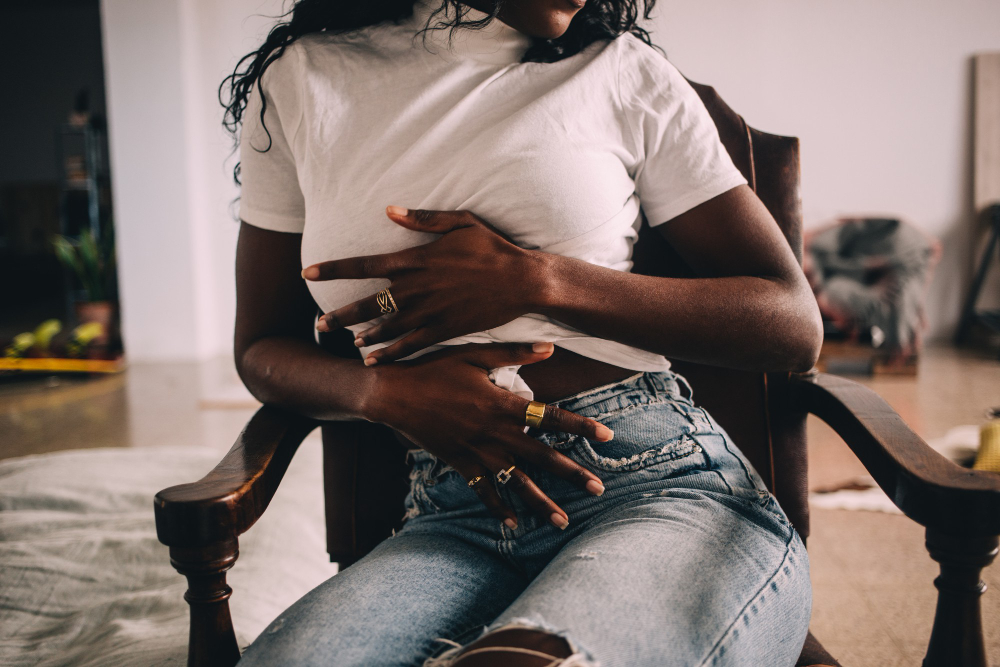
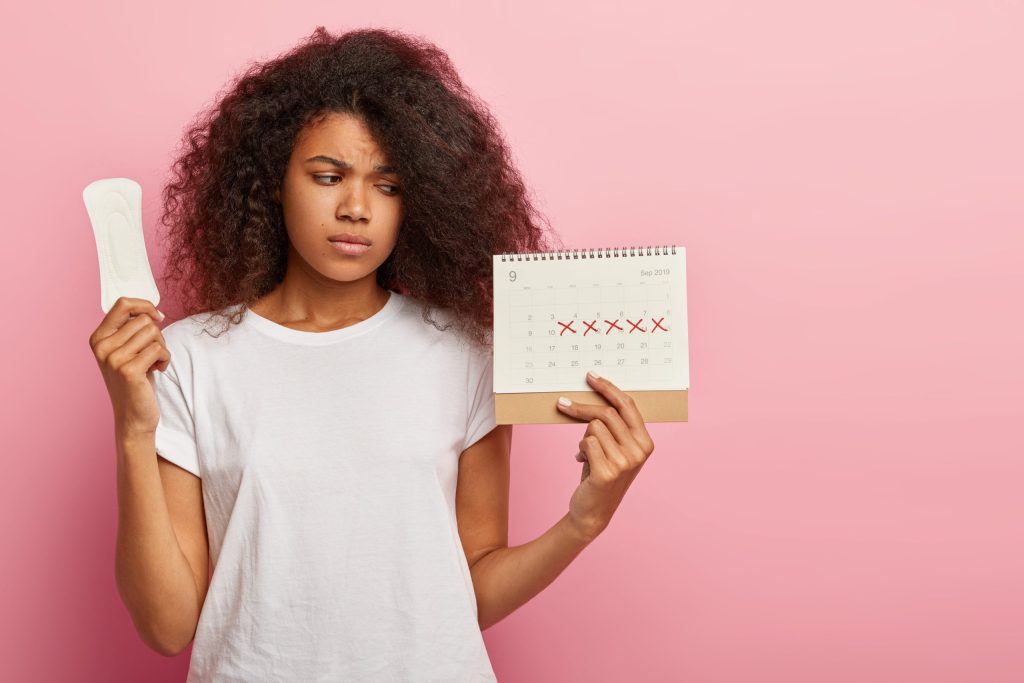
The first time Omowunmi missed her period for two months straight, she assumed she was the new Mary carrying the world’s messiah. Medical tests confirmed she was not pregnant. About a week after the tests came back clear, her cycle returned. She never found out what had caused the delay.
Omowunmi is 31 and lives in Kwara State. That was not her first experience with an absent cycle, and it was not her last. At the time of writing, she has not seen her period in a year. Each month, she checks for signs that it might return, trying not to attach too much weight to the waiting. Her fears are practical and specific: she worries about whether this will affect her ability to have children.
“It is not something I talk about,” she told me. “Even my parents are not aware of what is going on with me.”
Read Also: An Expert View On How The Heat Affects Your Hormones
Omowunmi’s situation is not uncommon. Across Nigeria, women are living with irregular cycles, absent periods, and menstrual pain that disrupts their daily lives, often for months or years, with little understanding of what their bodies are telling them or where to find answers. This is what menstrual health looks like when the conversation around it has never really started.
I have also lived on the edges of this silence my whole life. Growing up, I was taught, as most Nigerian girls are, that a missed period means one thing: pregnancy. Nothing else was explained. Nothing else was offered. I have had irregular cycles of my own. I have watched women around me manage pain that kept them in bed and accept it as their portion. It was just the way things were.
See Also: Everything to Know About the HPV Vaccine — Especially in Nigeria
Part of what sustains this silence is how menstruation has been conditioned into secrecy in Nigeria. It is treated as a private matter to be managed quietly, not a health matter to be understood fully. Women’s health brands visit schools and hand out pads to female students discreetly, like contraband. Girls learn to be ashamed before they learn to be informed. And so when something goes wrong with a woman’s cycle, her first instinct is not to call a doctor. It is to Google, to ask a friend, to take a painkiller, or to simply wait and hope.
To understand what is actually happening in the bodies of women like Omowunmi, I spoke to two medical professionals: Dr Funmilayo Wardle, a general practitioner based in the United Kingdom, and Dr Ayomide Owolabi, a general practitioner based in Nigeria.
Dr Wardle explained that once pregnancy has been ruled out, the most common reasons a young woman’s period disappears for months involve disruptions to hormonal balance. “Simple things like stress, excessive weight gain, excessive weight loss, and emotional stress,” she said, “then conditions likePCOS or ongoing infection.”
She also noted rarer conditions tied to specific medical events: Sheehan syndrome, which occurs when severe blood loss during childbirth damages the pituitary gland and disrupts hormonal function, andAsherman syndrome, which develops when scar tissue forms inside the uterus, often following a procedure such as a D&C. What these conditions share, beyond their clinical definitions, is that most Nigerian women have never heard of them. They are not part of the conversation because there has been no conversation.
Dr Wardle was clear that in most cases, once the underlying cause is identified and treated, fertility returns. “Infertility is not solely a women’s issue,” she added. “Male factors must be investigated too. Couples trying to conceive should be assessed together.” That framing alone, the idea that a woman’s body is not the default problem in a fertility concern, is information many Nigerian women have never been given.
Dr Owolabi, speaking from his experience practicing within Nigeria, confirmed that the gap between what women are experiencing and what they are being told is real. “Women are not properly informed,” he said. Socioeconomic barriers are part of the picture. Many women cannot access the secondary and tertiary facilities where proper diagnoses are made.
Cultural patterns compound the problem. “Many women depend on herbal remedies and hope the problem will resolve on its own, rather than seeking medical attention,” he said. When asked what he would tell a woman in Omowunmi’s position, he was direct: “She needs to seek proper medical attention and understand what could be going on.”
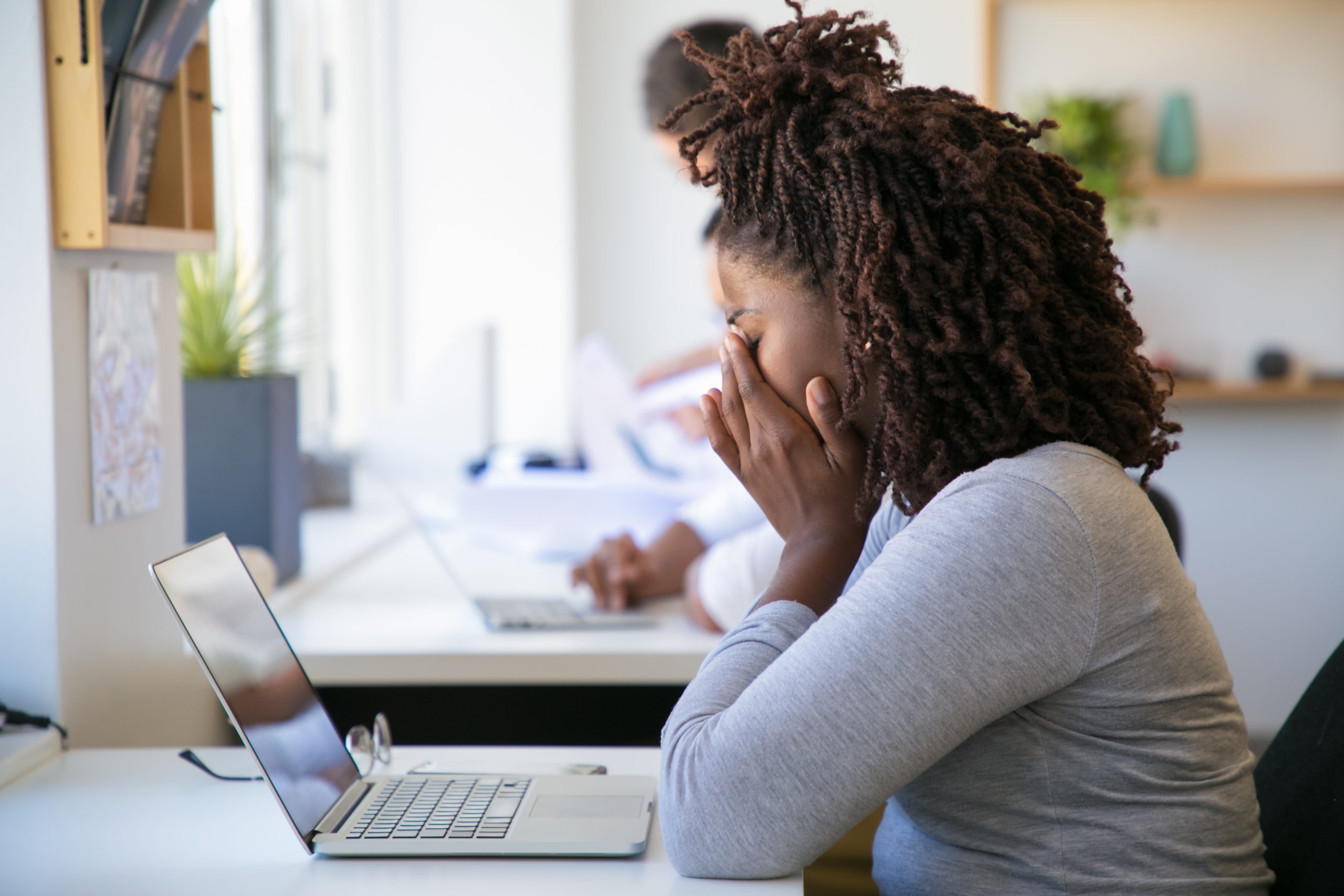
Comfort is thirty years old and a corps member currently based in Ibadan. She has experienced severe period pain since the very first time she menstruated. The pain, which she rates ten out of ten, arrives with dizziness, weakness, abdominal and vaginal pain, nausea, and purging. On her worst days, she has fainted. Her period lasts seven to eight days, and the pain is present throughout all of them.
She has seen gynaecologists. She has done scans for ovarian cysts,endometriosis, and infection. Every time, the result is the same: nothing is wrong. “The doctors said nothing was wrong with my body,” she told me. Yet the pain returns every month, and on the worst days she cannot manage basic tasks. Her parents know what she goes through and have tried herbs. The herbs do nothing. A gynaecologist advised her to stop using pain relievers after her flow came back heavier the following month, and told her that some women are simply built this way.She has refused to accept that this is simply how her body is, but she has found no relief.
Read Also: 5 Practical Treatments That Helped My Hyperpigmentation
Omowunmi is still waiting for answers and Comfort is still in pain. Both have seen doctors. Both have been told nothing is wrong. The issue is not that Nigerian women are refusing to seek help. It is that they are leaving consultations without the diagnoses, the information, or the pathways to care that their bodies require.
A woman who does not know what PCOS is cannot ask her doctor to test for it. A woman who has been told her pain is normal has no language to push back with. Until menstrual health is treated as the medical matter it is, women like Omowunmi and Comfort will keep managing largely alone, with Google, with herbs, and with the resignation that something is wrong but no one seems to know what.


One thought on “Pain Is Not a Portion: The Menstrual Health Conversations Nigerian Women Are Still Not Having”
Comments are closed.