

In Nigeria, when intimate content is shared without consent, the conversation rarely falls on the person who distributed it. It falls squarely on the woman in it; the woman who trusted someone with it. The consequences land entirely on her, social isolation and a damaged reputation. The violation itself is rarely the subject, the woman always is.
The law, as it stands, offers her very little recourse, and society offers her even less grace.
See also: Why Nigerian Women Keep Showing Up for Each Other: HERtitude as a Case Study
Sade’s world tumbled down the moment she found her intimate content spread across an anonymous group she was already a member of. She saw it the same way strangers did without warning, without preparation, and without any say in what happened next.
Oluwadarasimi, a 23-year-old nurse who witnessed everything her friend went through, described the moment simply: “…… she wanted the ground to just open and swallow her up.”
Sade had been in a relationship and she trusted her boyfriend completely. The video was made privately and shared only with him; an act of intimacy she thought was rooted in love and trust. But after a fight, he sent it to a friend, and that friend posted it publicly on an anonymous group. When Sade found out, she broke down completely, she could not eat nor could she could not bring herself to leave her house for days.
When she finally did step outside, her community mocked her without mercy. She even thought about ending her life. Her family never found out because the school managed the situation quietly. Her friends showed up for her but it was not enough to carry the weight of what had happened. She eventually saw a therapist before things slowly began to get better.
See also: How Friendship Circles Impact Women’s Emotional and Mental Health
“Society will not understand,” Oluwadarasimi said. “She did it because of love and trust, and he used that against her.”
Consenting to create something privately is not the same as consenting to its distribution. One is an act of intimacy between two people who trust each other. The other is a completely separate decision that requires a completely separate agreement, one that was never asked for and never given.

Oluwaseunola Olaoye is a law graduate specialising in oil, gas and family law. He is clear about one thing from the outset; if both parties did not consent to the release of intimate content, then what has been shared is illegal. “If there is a meeting of minds, there is an agreement,” he explains. “No meeting, no agreement.” The moment one party shares content without the other’s knowledge or approval, they have stepped entirely outside the bounds of any agreement that previously existed between them.
He draws a clear distinction between consenting to the creation of content and consenting to its distribution; two entirely separate acts that each require their own agreement. He recalls a case from his internship where a man agreed to have his photograph taken but never agreed to it being posted publicly. That single act of posting without permission became a breach of agreement and a violation of intellectual property.
The principle, he argues, applies directly and powerfully to intimate content. As long as both parties appear in the video, the content belongs to both of them equally. Neither has the right to distribute it without the full and explicit consent of the other.
On the question of Nigerian law, Olaoye is more optimistic than many might expect. He argues that the Nigerian court system has developed significantly in recent years and that cases involving non-consensual content are now treated with considerably more urgency and priority than before.
He talked about Ekiti State, his hometown as a clear example of how Nigerian states are actively strengthening protections for women. Around 2020, Ekiti State refined its existing criminal code, adding sections that made rape a life imprisonment offence with absolutely no room for negotiation. “The state judiciary will not want to hear any rape case,” he says, “because once it is filed, the judge sitting on that case will make sure it is life imprisonment. It was a directive given.”
For Olaoye, this signals that Nigerian law is genuinely moving in the direction of protecting women’s dignity rather than undermining it.
However, he acknowledges a significant and troubling gap between what the law says and what women actually do when they are violated. “People do not have legal knowledge and do not know how to handle issues like this,” he says. Many women do not know they have legal recourse when their intimate content is shared without consent.
They suffer in silence, absorbing consequences; emotional, social and professional and that the law was in fact designed to help them fight. Ignorance of the law, he argues, is itself part of what makes the violation so utterly devastating.
The consequences of non-consensual intimate content extend far beyond embarrassment or shame. Research shows that women bear the heaviest burden of online abuse in Nigeria.
According to a report cited by Global Voices, a 2024 report by Gatefield found that women were targeted in 58% of online abuse cases in the country, with social media platforms identified as the primary spaces where that abuse occurs.
A separate report found that approximately 45% of Nigerian women have experienced cyberstalking. These are not isolated incidents, they are deeply noticeable patterns. Behind every statistic is a woman like Sade, someone who trusted another person with her most private self and paid for it with her peace, her reputation, her dignity and nearly her life.
The question Nigerian society almost never asks is why the person who chose to share the content is not the one being disgraced. The answer lies in how intimacy itself is policed in Nigeria. A woman who creates intimate content is seen as having forfeited her right to dignity the moment that content leaves the privacy it was created in.
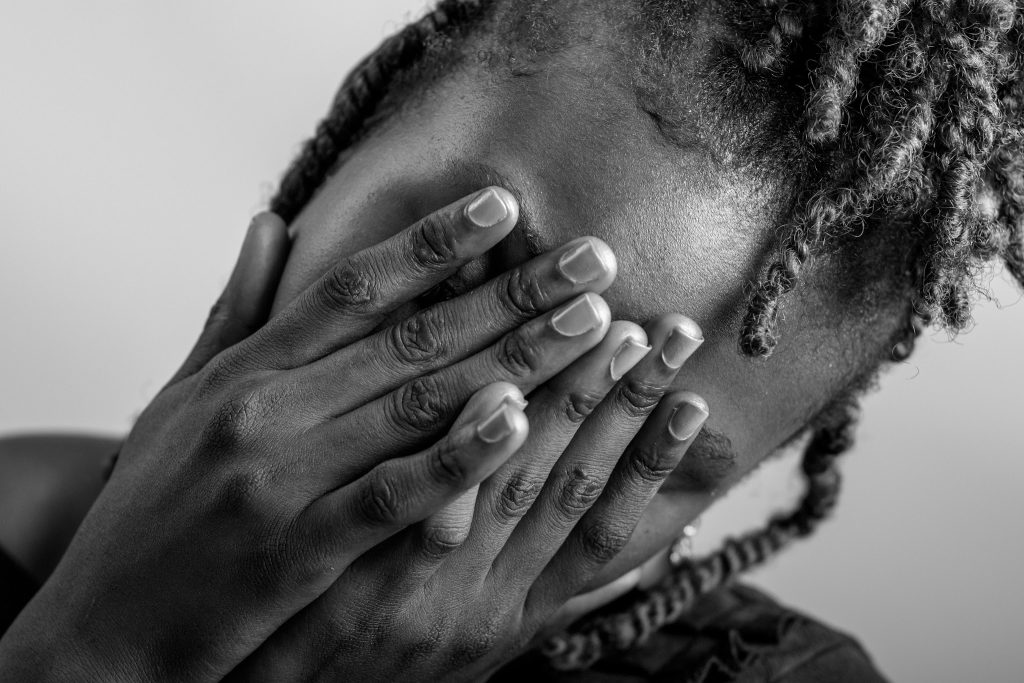
The man who shares it without consent is seen as having done something understandable even expected. This is not simply a gap in morality, It is a gap in how society assigns responsibility, and it is one that the law alone cannot close. The violation is real and the law recognises it as illegal. But culture has not caught up, and the woman absorbs consequences that the law was designed to address but that culture continues to ignore.
See also: How Pop Culture Is Shaping Mental Health
Sade eventually got better but getting better did not mean getting justice. The video is still out there, the person who shared it faced no consequences. The system; legal, social, digital offered her almost nothing in the moment she needed it most. Olaoye is right that Nigerian law is developing, but development is slow and violation is fast.
Until consent is understood not as a single moment but as an ongoing condition that must be maintained at every point after intimate content exists, women like Sade will keep discovering their most private moments in the most public places. And the person responsible for that is rarely the one who faces it.






One thought on “Who Controls the Footage? Women, Consent, and the Myth of “Private” Content.”
Comments are closed.