Her Bag is Elowell MAX’s dedicated space for the economic life of the Nigerian woman. Not financial advice, and not career inspiration. A serious look at the economic grind: how women earn, spend, and navigate the real ways money steers their choices in relationships, careers, and daily life.
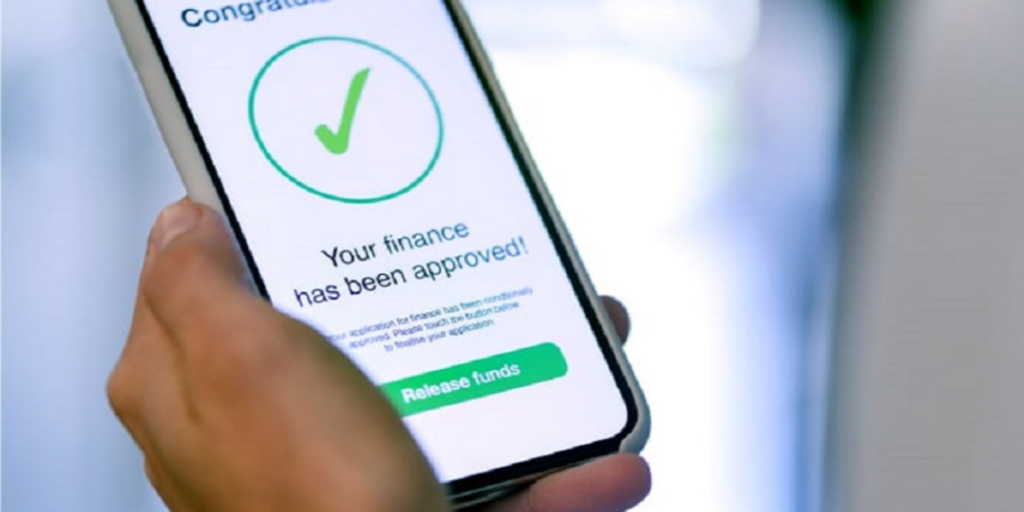
Nigeria’s digital lending industry now has over 500 registered operators, and as of January 2026, the Federal Competition and Consumer Protection Commission (FCCPC) has blacklisted 45 illegal loan apps, with over 100 more on its watchlist. This number continues to grow because new ones appear just as fast as old ones are flagged. What the ads for any of them will never tell you is what happens after you click download and get a loan.
Idera (pseudonym), a thirty-year-old Nigerian woman, has clicked those ads multiple times. The experience is not as rosy as the ads make it look.
“The first time I used a loan app, I was in school,” she says. “I was curious about how the whole thing worked, and I happened to need money for something. It wasn’t anything serious.”
She says she borrowed a small amount, and though she cannot remember exactly how she paid it back, she did eventually, and it was not much of a hassle. Back then, using the app had not felt like a premonition. If anything, it had felt like a working system for people in need.
But that working system was about to reveal its other face. Idera’s second experience, which came several years after the first, lays this bare.
See Also: Low-Effort Love: Nigerian Women Are Done Dealing With Nonchalant Men
From One to Four Loan Apps

She had just gotten a new job, something to set her on the career path she had been chasing for so long, but the salary was abysmal. She also had to move in with a family friend because of proximity to her new workplace, and the house was not in the best hygienic conditions.
“Eating in that house was almost impossible, the kitchen was always filled with dirty plates left to rot for days. I always had to buy food for the sake of my own health and sanity,” she says. The cost of food, transportation to work, and data expenses all came out of a salary that was already below minimum wage. It did not take long before she had to turn to loan apps again.
“That was where my problems began. I would borrow money to augment my salary, but then I had to pay back every month from the same salary that was already not enough.” She borrowed from a second app to cover the first one. And then a third and a fourth. “Within the blink of an eye, I was buried in debt way too huge for my meagre income to cover.”
What started as somewhere between fifty and a hundred thousand naira in borrowing became a repayment burden of three to five times that amount. For eight months, every salary she earned was already spoken for before she received it.
The interest rates are the part the apps never advertise. Illegal lenders charge the equivalent of 300 to 1,000 per cent annually, which is how a fifty thousand naira loan becomes two hundred thousand naira of debt within months. But what Idera remembers most is not the numbers. It is the calls that came when she could no longer keep up with the payments. “They will call you, they will harass you. Every day I lived in fear of them exposing my secrets to people. Because the main reason I had borrowed from them in the first place was to keep myself together.”
TechCabal’s 2025 investigation into predatory digital lending found that this is a deliberate product design. Lenders routinely contact borrowers’ family members, colleagues, pastors, and friends as a standard debt recovery tactic. The same shame that drove her to the apps was the weapon they held over her.
Idera eventually sought her parents’ help when the harassment became too much, and she got a job that paid double what she had been earning. Combined, she was able to pay off all her loans, and that should have been the end of that.
It was not. Three years later, Idera was far more experienced in her career and needed money to start a business.

“I had this business idea,” she says, “and I was really keen on starting it.” A digital business, fully remote. It needed a website, staff, tools, a marketing budget, and money for ads. Her salary, even the better one, could not absorb those upfront costs. The economy had also worsened, and inflation had eaten whatever growth she had made.
“I thought, okay, this is a business. Definitely I’ll be able to get money to pay back.” She knew what loan apps were. She had lived inside the first spiral long enough to understand exactly what they were designed to do. She went back anyway, because the business felt viable and there was no other door open.
The business did not move as fast as she had projected. It rarely does in the first months of building from borrowed capital. She took a second loan to cover the first month’s repayment. Then another. “Somehow, somehow, together, I ended up racking up a loan of over ten million naira. Eventually, the business failed. It was not sustainable to keep bleeding borrowed funds into it. So I made the decision to shut it down.”
She has not resolved this one. She is still inside it, and the weight of it has compounded in ways that go beyond the financial. “I thought I was stressed the first time. Now I’m super stressed. Everything culminated into depression, loss of identity, regret, impostor syndrome, so many things wrapped in one.” Idera now lives in constant fear of being dragged on social media and her situation becoming public.
While Idera wants people to see her story as a cautionary tale, she does not want it read as a moral lesson. What she wants is for something to be done about how easily this money is accessed.
“I wish these loans were not so easily accessible, because the over-accessibility feels almost predatory. The economy is terrible, and Nigerians, especially women, need to survive. Everywhere you turn, there are ads telling you how easy it is to get the money, no collateral, nothing to worry about. They don’t tell you about the interest rates. They don’t tell you that they’re going to be harassing you. They won’t tell you any of this.”
The FCCPC, between March and August 2025, resolved over 9,000 complaints against digital lenders and recovered approximately ten billion naira for consumers. These numbers show just how many Ideras are out there, borrowing in the gaps left wide open by a failing economy and an inaccessible formal credit system, and paying back far more than they ever borrowed.
The loan apps did not create the desperation. Rather, they built a product around it. And in a country where that desperation is not in short supply, business is very good.