
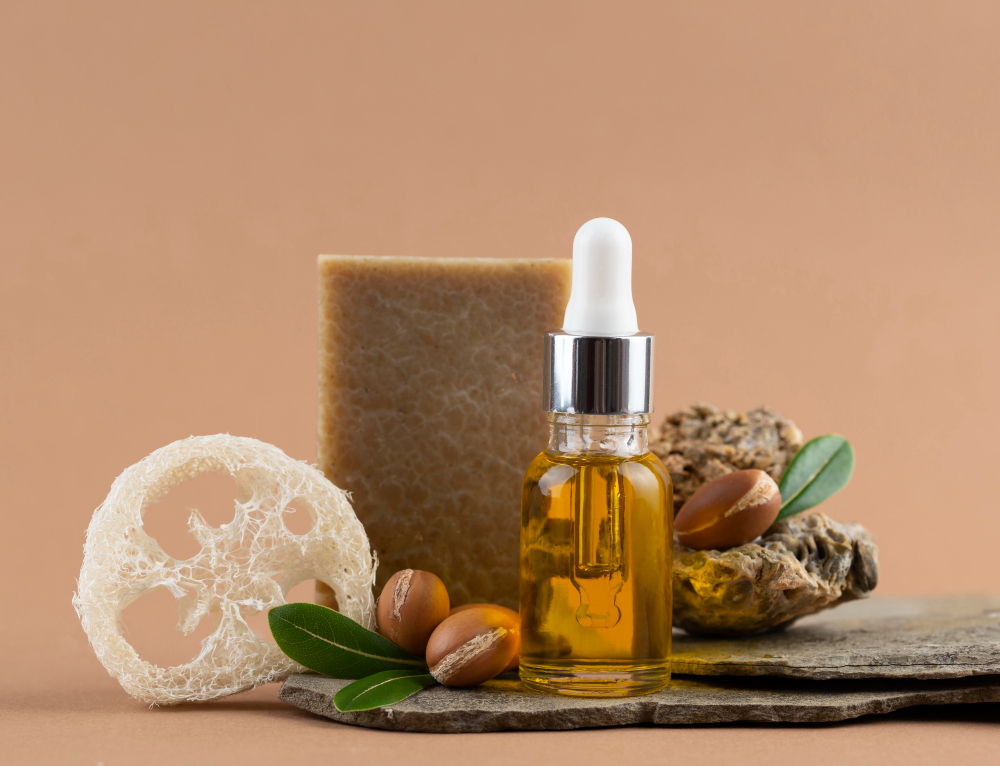
The global clean beauty industry is worth billions, and if you trace what is actually driving that growth, you will find a familiar list of ingredients. Baobab oil. Shea butter. Moringa. Ose dudu. They are showing up in luxury skincare lines and international beauty retailers now, described as botanical breakthroughs and priced to match. But these ingredients are not new, and they were not waiting to be discovered. They have existed in Nigerian markets and West African homes for generations, used consistently and passed down.
The question worth asking is not whether they are effective. That was never really the issue. The issue is why it took clinical validation from institutions outside Africa to make the world pay attention, and what it says about which systems get to decide what counts as knowledge.
See Also: 7 Best Treatments for a Healthy Hair This Easter
The Ingredients Dermatologists Are Now Recommending

Ose Dudu
Ose dudu has been part of Yoruba bathing culture for centuries, made by women who understood its composition long before it became a trend. The process involves burning plantain peels and cocoa pods down to ash, combining that ash with palm oil and, depending on the maker, shea butter or other local fats, and allowing the mixture to cure.
The alkalinity of ose dudu accounts for its cleansing power. It disrupts the cell walls of bacteria and fungi, which is why generations of users associated it with clearer skin, reduced breakouts, and relief from conditions like eczema. What was described in households as “it clears the skin” is now documented in dermatological research as antimicrobial and antifungal activity. The outcome was always the same. What changed is the language used to explain it.
That same alkalinity is also its main limitation in raw form. Used too frequently or left on for too long, it can strip the skin’s natural moisture barrier, which explains why some people found it too strong for daily facial use. Modern formulations address this by adjusting the pH and blending the soap with ingredients that buffer its intensity without eliminating what makes it effective.
Ose dudu is also one of the most appropriated ingredients in the global beauty market. Western brands have spent years marketing and selling “African black soap” with little or no traceability to actual Yoruba production methods or the communities that developed it. Brands like Ajali Handmade Naturals are doing something different, working with the ingredient in a way that is both scientifically refined and culturally accountable, producing formulations that preserve the integrity of ose dudu rather than just borrowing its name.
Shea Butter
Extracted from the nuts of the shea tree, shea butter has been used for skin and hair care across Nigeria, Ghana, Burkina Faso, and beyond for centuries. In Yoruba households, it is called ori, applied to newborns, used in postpartum care, rubbed into cracked heels and dry elbows, and worked into skin during harmattan.
The science behind why it works so reliably comes down to its fat composition. Shea butter is rich in oleic and stearic acids, fatty acids that reinforce the skin’s natural barrier and lock in moisture rather than sitting on the surface. It also contains triterpenes, anti-inflammatory compounds that support skin repair and soothe irritation. Research has confirmed that shea butter outperforms mineral oil in preventing transepidermal water loss, functioning as both an emollient and an occlusive, softening the skin while sealing in hydration. What was once described simply as “it keeps the skin soft” is a fairly accurate description of a multi-functional moisturiser.
Its limitation in raw form is its richness. On skin that is already producing sufficient oil, particularly acne-prone skin, it can be too heavy and may clog pores if used in excess. What people once called “too thick” is now understood as a formulation compatibility issue rather than a flaw in the ingredient itself. Arami Essentials work with shea butter in lighter, blended formulations that retain its moisturising function while improving how it sits on different skin types.
Moringa Oil
Moringa has been used across West and East Africa for so long and in so many ways, as food, as medicine, as a water purifier, and for skin care, that its classification as a skincare trend feels almost absurd. The oil is extracted from the seeds of the moringa tree and has been applied to skin for nourishment and repair across Nigerian households for generations, particularly when the skin was dry, uneven, or depleted by sun exposure.
What made it useful then is what makes it interesting to dermatologists now. Moringa oil is rich in oleic acid, which allows it to penetrate the skin quickly without leaving a heavy residue. It also contains vitamins A and C and significant antioxidant compounds that protect the skin from oxidative stress, the kind of environmental damage that accelerates aging and contributes to uneven skin tone. Published research has also documented its anti-inflammatory properties, making it useful for calming irritated or acne-prone skin.
What traditional users understood intuitively is that moringa restores the skin without weighing it down. That is not a small thing in a skincare market full of oils that promise lightness and do not deliver it. R&R Luxury incorporates moringa oil into facial oils and serums that position it where it belongs, as a serious, functional skincare ingredient rather than an exotic addition to a product list.
See Also: The Forehead, Reconsidered: Why It Finally Makes Sense in 2026
Baobab Oil
The baobab tree is one of the most recognisable presences across sub-Saharan Africa, living for thousands of years and used across generations for food, shelter, and medicine. The oil extracted from its seeds has been applied to skin across the continent for centuries, valued for its ability to restore softness to skin that has been damaged, dried out, or stressed by sun and climate.
Its skin benefits are tied to its unusually balanced fatty acid profile. Baobab oil contains omega-3, -6, and -9 fatty acids, a combination that supports skin elasticity, repairs the moisture barrier, and improves texture over time. It also contains vitamin C, which contributes to collagen support and helps address uneven skin tone. Despite being an oil, it absorbs readily, which is why it was historically used for long-term skin maintenance rather than immediate surface relief.
What dermatology is now recognising in baobab oil is what traditional use already demonstrated through consistency: that it works gradually and reliably on skin that needs structural repair rather than quick fixes. Skin Gourmet formulate with baobab oil in minimally processed products that preserve as much of its natural nutrient profile as possible, which is the right approach for an ingredient whose value lies in what it contains rather than how it has been altered.
From Local to Luxury
The pattern across all four of these ingredients is the same. They were present, they were used, they worked, and they were not taken seriously in the terms that global industry uses to determine value.
Modern skincare science has now provided the vocabulary: barrier function, antioxidant activity, antimicrobial properties, emollient and occlusive action. That vocabulary is useful. It allows for precision in formulation, safety in wider use, and documentation that makes an ingredient credible across markets. But the vocabulary did not create the effectiveness. It described what was already there.
What has changed alongside science is economics. Baobab, moringa, shea, and ose dudu are now global skincare commodities, and the brands extracting the most value from that status are not always the communities that held this knowledge first. That is a conversation the beauty industry is still largely avoiding, even as it profits from the ingredients at the centre of it.
Nigerian brands working with these ingredients are operating in a different register. They are formulating with cultural context, scientific rigour, and accountability to the communities these ingredients come from. That distinction matters, and it is worth paying attention to as a consumer.
The question of why it took so long for these ingredients to receive formal recognition does not have a flattering answer. But the more useful question now is what we do with the recognition now that it has arrived, and whether it benefits the people who never needed to be told these ingredients worked in the first place.