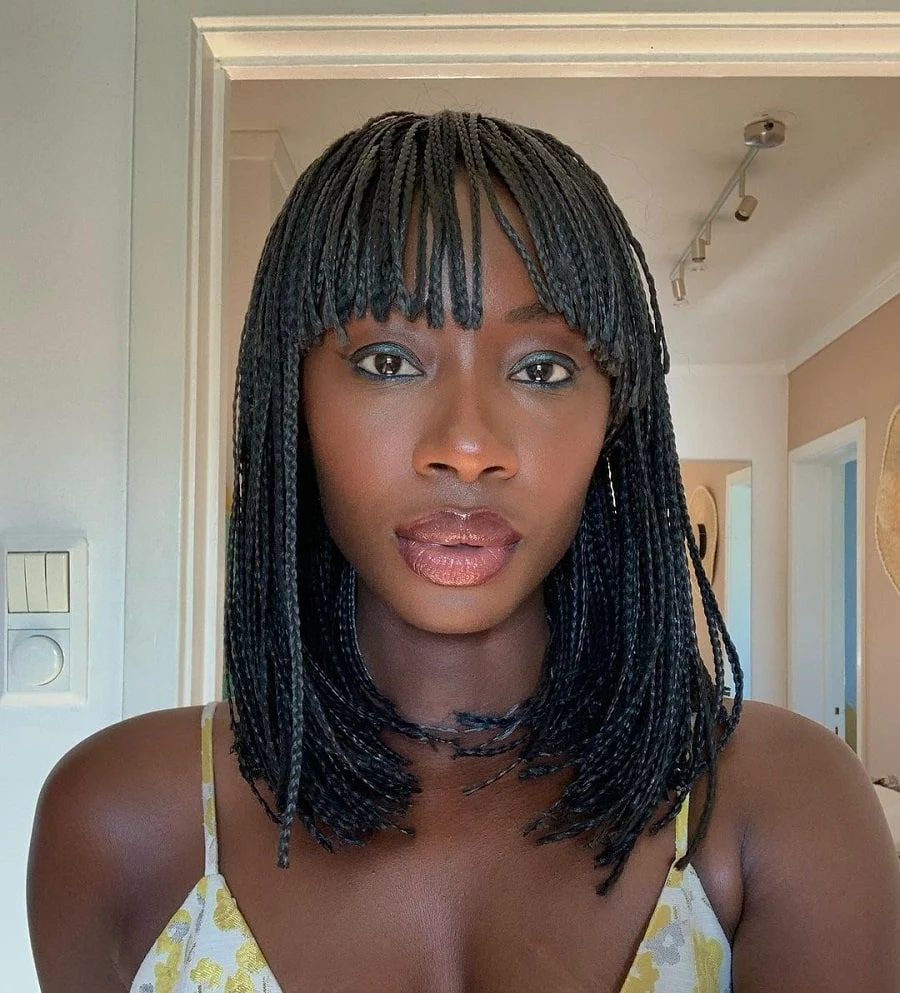
It’s hair day. You walk into a beauty salon, pick an attachment colour and length, then sit for hours while it is braided tightly into your scalp.
What the fibres are made from or the chemicals they contain has rarely been part of the conversation. Most women simply want the braids to turn out neat, last long enough, and feel worth the money spent.
But a few days later, your scalp suddenly starts to itch. Tiny red bumps appear along your hairline, and there is a strange tension around your eyes. You stand in front of the mirror trying to figure out what went wrong and whether taking down fresh braids is even an option after spending hours and money installing them.
What’s Inside Synthetic Braiding Hair, And Why Women Are Concerned
Now, more women are beginning to ask questions that were previously ignored: what exactly is inside synthetic braiding hair, and could it be affecting their health?
Online conversations around “toxic braiding hair” have grown significantly in recent years, with women sharing experiences of irritation, burning sensations, headaches, and allergic reactions after installing certain attachments.
The discussion gained even more attention after an investigation by Consumer Reports claimed that potentially harmful chemicals were detected in all the synthetic braiding hair samples they tested.
According to the report, some of the samples contained compounds linked to health concerns, including volatile organic compounds such as acetone, as well as traces of heavy metals and chemicals classified as possible carcinogens.
While researchers are still studying what long-term exposure may mean for regular users, the findings have pushed many women to pay closer attention to the products they wear on their scalps for weeks at a time.
Experts, however, advise that the growing concern around synthetic braiding hair should be approached with awareness rather than panic.
According to a beauty expert online, not every reaction after installing braids automatically points to toxicity, as factors such as tight braiding, scalp sensitivity, poor hygiene, or allergic reactions can also contribute to irritation.
However, note that persistent itching, burning sensations, redness, bumps, or inflammation after installing synthetic hair should not be ignored, especially when symptoms repeatedly occur with certain brands or styles.
Wigs vs Braids: Which Is Safer?
Because of the growing conversations around synthetic braiding hair, more women are beginning to shift toward wigs and frontal installs, seeing them as the safer alternative.
Unlike braids, wigs create less scalp tension, can be removed easily, and allow women to access and care for their scalps more frequently instead of leaving hair tightly installed for weeks at a time.
But the reality is more complicated than simply choosing wigs over braids. Many synthetic wigs are made from similar plastic-based fibres used in braiding attachments, meaning some of the same concerns around chemical exposure still exist. Wig adhesives, bonding glue, and holding sprays can also trigger irritation or allergic reactions for some users.
Human hair wigs are often considered a better option, but their high cost makes them inaccessible for many women, especially in a country where synthetic styles remain the most affordable and practical choice.
In many ways, the debate is not strictly about wigs versus braids, but about how long these styles are worn, the quality of the materials used, individual scalp sensitivity, and overall hair practices.
Braids may involve more prolonged scalp tension and continuous exposure, while wigs offer flexibility and easier scalp access. However, neither option is automatically risk-free, especially when synthetic materials are involved.
See also: How to Make Your Hair Extensions Less Toxic
For many Nigerian women, however, synthetic braiding hair is not simply a beauty preference but a practical part of everyday life. Braids are affordable, convenient, long-lasting, and deeply woven into beauty culture.
Compared to human hair wigs and premium alternatives, attachments are far more accessible to the average woman trying to maintain her hair consistently without spending excessively. In a country where economic realities heavily influence beauty choices, simply telling women to “switch” is not always realistic.
Instead, many women are choosing smaller but more intentional changes. Some now soak braiding hair in vinegar before installation in an attempt to reduce chemical coatings and irritation.
Others are taking longer breaks between hairstyles, paying closer attention to how their scalps react, or choosing brands marketed as hypoallergenic. Some alternate between wigs and braids to reduce constant tension on the scalp, while others are becoming more selective about how long they keep synthetic styles installed.
See also: 7 Best Treatments for a Healthy Hair This Easter
For years, synthetic braiding hair was treated as just another part of beauty culture, something women used regularly without questioning what was inside it. But as conversations around wellness, ingredients, and long-term exposure continue to grow, more women are beginning to look beyond how a hairstyle appears and pay attention to how it affects their bodies too.
The discussion around synthetic hair does not necessarily mean braids are dangerous or that women must completely abandon them. Rather, it reflects a broader shift toward informed beauty choices in a culture where convenience and appearance have often mattered more than ingredients or manufacturing processes.
Whether women choose wigs, braids, or a combination of both, many are now approaching their hair routines with more awareness than before.
For Nigerian women especially, where braids remain both culturally familiar and economically practical, the conversation is unlikely to disappear anytime soon.
What may change instead is how women select products, how long they wear certain styles, and how seriously they take signs of irritation from their scalp and skin.
Beauty routines that once felt automatic are now being questioned, and for many women, that awareness alone is already changing the conversation.