
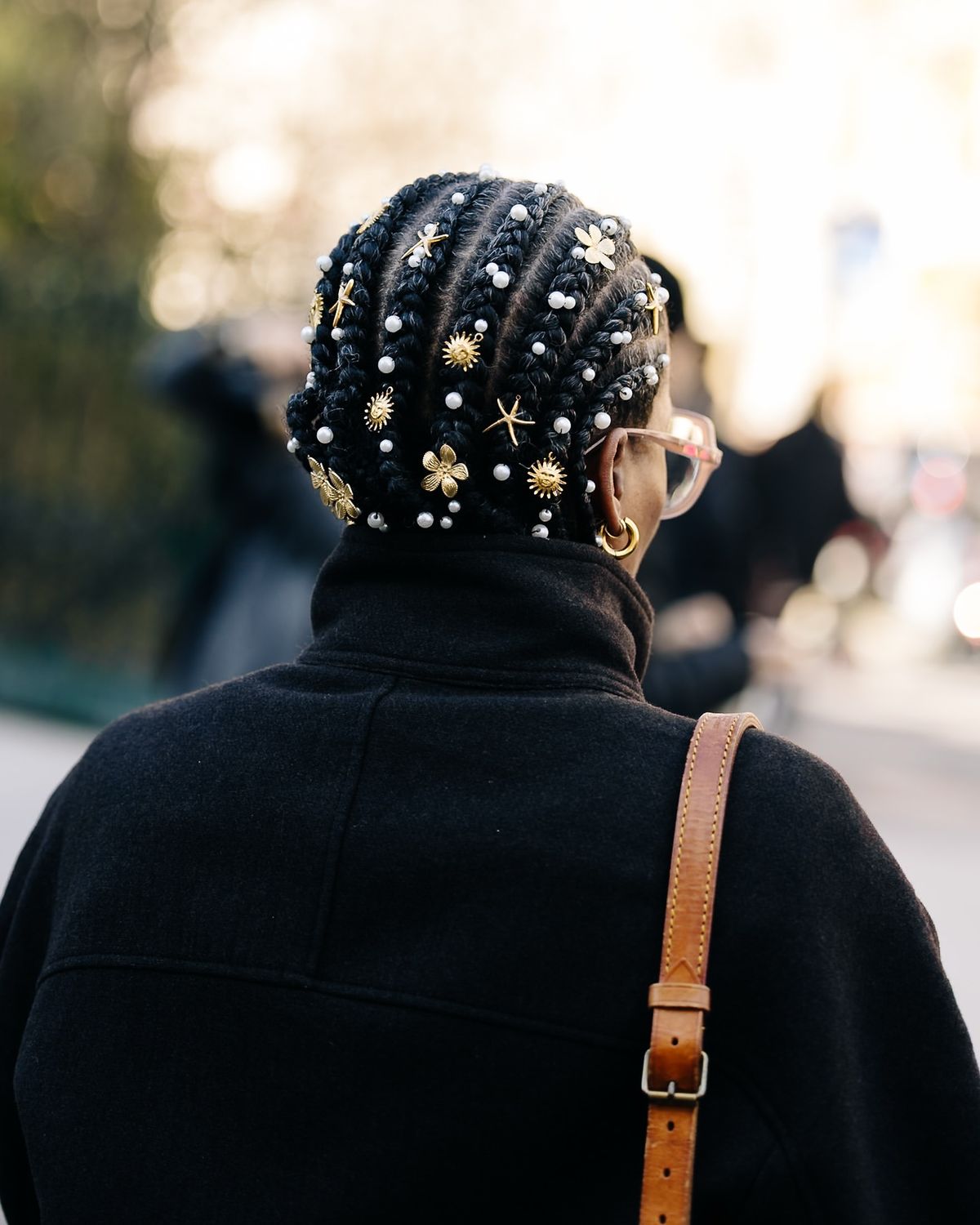
The styles filling up appointment books in salons right now are not random. They reflect a specific shift in what Nigerian women want for their hair. From protection that does not compromise on appearance to styles with cultural roots that also hold up through work weeks and events, Nigerian women are intentional about what they want.
These are the five braid styles trending in 2026:
See Also: Budgeting for Hair, Nails, and Bills Without Losing Your Mind
Patewo Braids
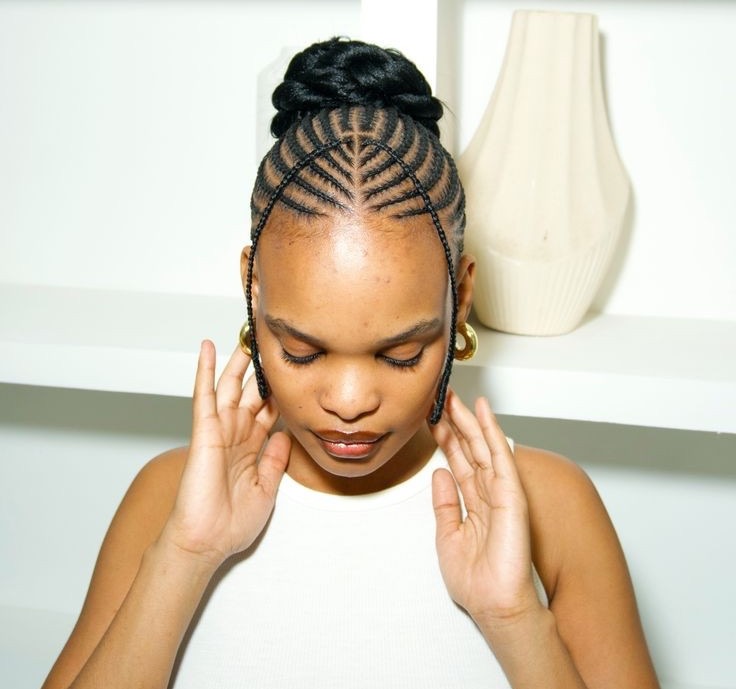
Patewo braids are one of those hairstyles that never truly left. They simply waited for the right moment to return. A traditional Nigerian style whose name comes from the Yoruba word for clapping, Patewo braids are arranged so that each section converges towards a central point, creating a pattern that resembles two hands coming together.
It is a style that feels both culturally grounded and current, which is exactly why it keeps appearing on salon request lists across Lagos.
The style works best on oval, round, and heart-shaped faces, where the converging braid pattern naturally draws the eye upward and frames the face. It is also one of the more affordable protective styles available, making it a practical choice without sacrificing elegance.
In standard salons on the mainland, you can expect to pay between ₦10,000 and ₦20,000, while premium salons on the island such as TasalaHQ charge around ₦35,000. In Lekki salons, prices can reach ₦65,000 to ₦80,000 with extensions and washing included.
To keep the style looking fresh, apply oil to your scalp two to three times a week to prevent itching, follow up with a water-based moisturiser to keep your hair hydrated, and finish with a light mousse to maintain definition.
Knotless Braids with Wavy Ends
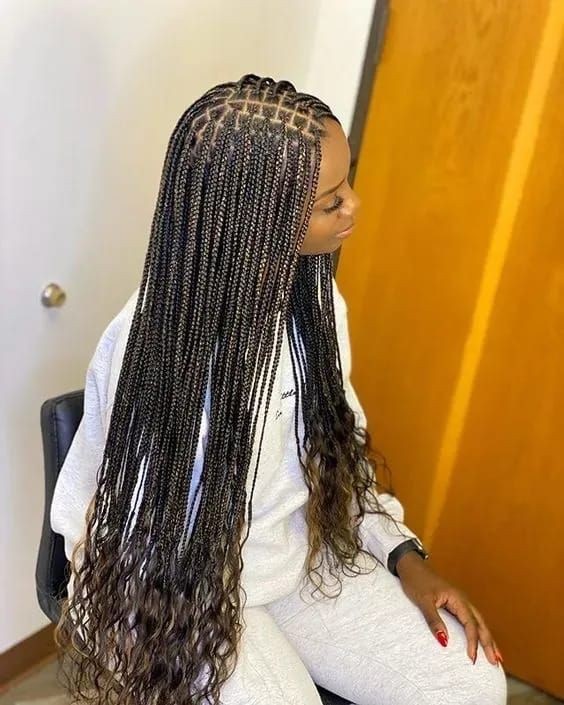
Knotless braids with wavy ends are the upgraded version of the classic box braid, and Nigerian women have fully embraced what makes them different.
Unlike traditional braids that begin with a knot at the root, knotless braids start with your natural hair before gradually incorporating extensions, making them significantly lighter and far gentler on the scalp. The wavy ends bring a finish that is dressed up enough for events but relaxed enough for everyday wear.
This style suits oval, long, and heart-shaped faces particularly well, as the length and soft ends help balance facial proportions without overwhelming the face.
In local Lagos salons, you can expect to pay between ₦10,000 and ₦25,000 for a basic installation, while mid-range salons typically charge between ₦30,000 and ₦60,000. Premium salons in Lekki and high-end areas can go well above ₦80,000 to ₦120,000, particularly when human hair curls are used for the wavy finish.
To maintain the style, apply a moisturising or anti-itch oil to your scalp regularly, sleep with a silk or satin bonnet to minimise frizz, and wash your scalp gently every few weeks to keep things fresh across the six to twelve week wear period.
See Also: Has the Lagos Hairline Era Run Its Course?
Pearl Cornrows
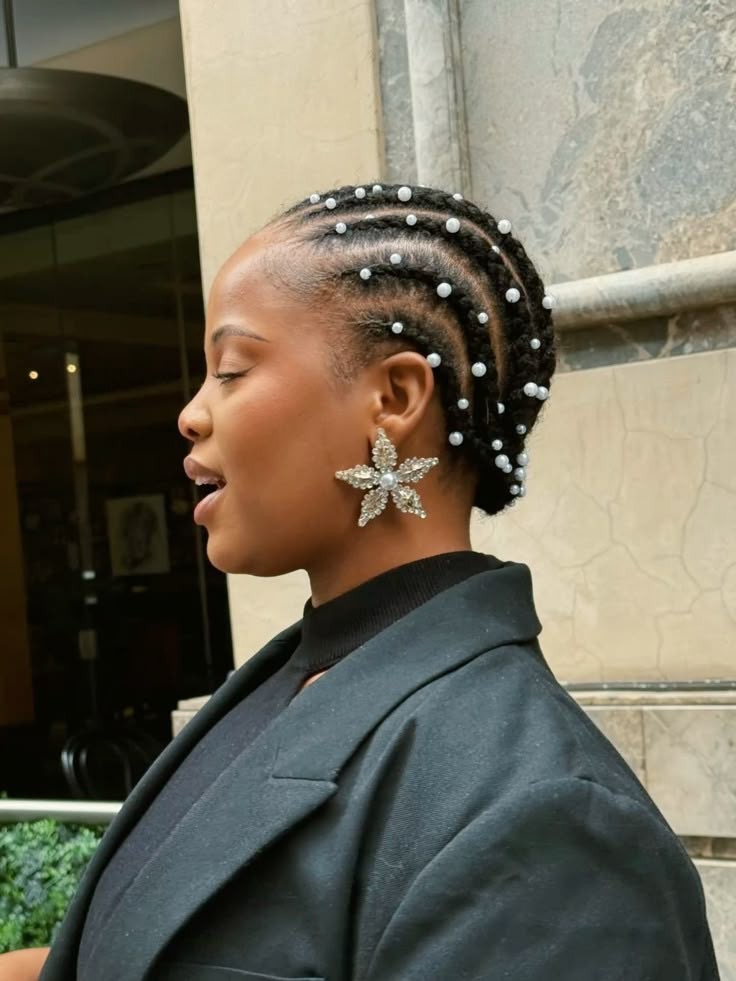
Pearl cornrows are the elevated version of a style Nigerian women have always known: classic cornrows reimagined with delicate pearls threaded through each braid, creating a look that feels both traditional and completely of the moment.
The addition of pearls transforms what could be a simple protective style into something that works equally well for a brunch, a wedding, or a regular Saturday in Lagos.
The style works beautifully on oval, round, and square face shapes, where the clean lines of the cornrows complement strong bone structure and the pearls introduce a softness that tempers the overall effect.
On the mainland, basic cornrow installation starts from ₦3,000 to ₦10,000, with the pearls adding an extra ₦2,000 to ₦5,000 for accessories and the additional time required to thread them. Mid-range salons typically charge between ₦15,000 and ₦45,000 for the full look, while premium studios in Lekki Phase 1, Victoria Island, and high-end spots like Braiders Club or TasalaHQ start from ₦20,000 to ₦35,000 and above. If you would rather have a mobile stylist come to you, factor in an additional ₦5,000 to ₦15,000 on top of the base price.
Keep your scalp moisturised throughout, sleep with a silk or satin bonnet to protect the pearls and prevent frizz, and check periodically that the pearls are not catching on your clothing or bedsheets. After three to four weeks, a light mousse will help lay down any new growth and keep the style looking intentional.
Faux Locs
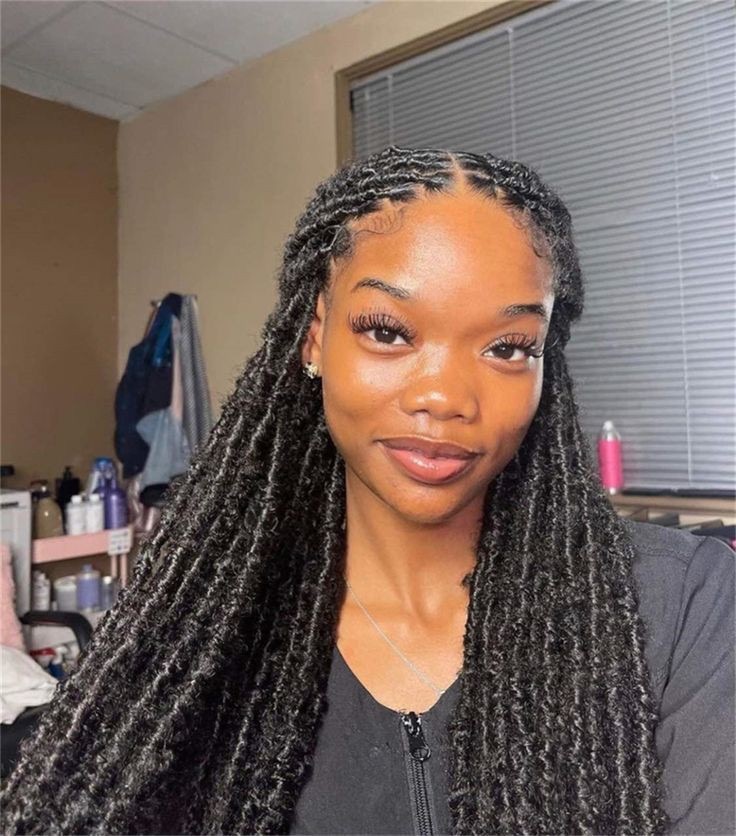
Faux locs are the protective style for the woman who loves the look of dreadlocks but is not ready to commit to them permanently. Installed through a wrapping method or via crochet, faux locs mimic the appearance of natural locs without locking you in.
They are lightweight when installed correctly, protective against environmental damage, and versatile enough to be worn in updos, half-up styles, or fully down. The appeal is clear: the boldness of locs with the freedom to change your mind.
Faux locs suit oval, oblong, and heart-shaped faces particularly well, as the length and texture add dimension without overwhelming softer features. On the mainland, installation costs range from ₦10,000 to ₦15,000, while island salons typically charge between ₦20,000 and ₦25,000.
If you are purchasing your own hair, standard faux loc packs cost between ₦4,000 and ₦7,500 per pack, with most stylists recommending four to six packs for a full result. Specialty crochet locs can cost between ₦13,000 and ₦15,000, with premium bundles sitting at the higher end.
Once installed, focus on washing your scalp rather than the entire loc, aiming for a gentle rinse every one to two weeks if you sweat frequently. Lightweight oils such as jojoba, argan, or coconut oil work best for sealing in moisture. Avoid heavy creams and butters, which can clog the locs and attract dust, especially during Harmattan.
Goddess Braids
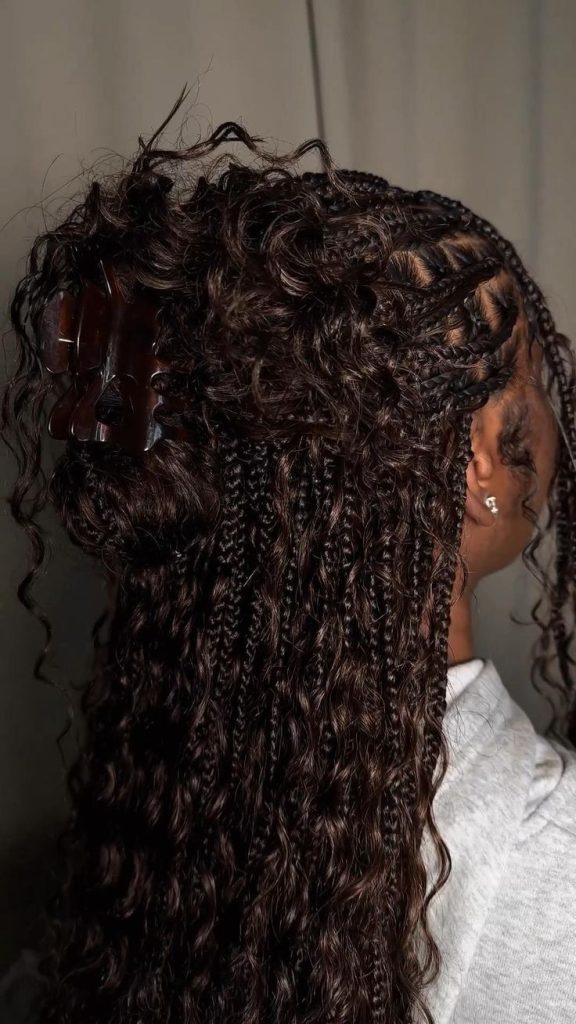
Goddess braids are large, bold braids that sit close to the scalp and carry a quiet authority wherever they go. Their versatility is what keeps women coming back. They can be worn as a classic two-braid style, swept into an updo, adorned with beads or cuffs, or finished with wavy or curly ends for something softer. For the woman who wants a protective style that also makes a statement, goddess braids deliver.
The style suits oval, round, and square face shapes best, where the boldness of the braids complements strong features and adds something regal to the overall look.
On the mainland, goddess braids start from around ₦17,000, while premium salons on the island charge considerably more depending on the complexity of the style and the type of hair used. High-end studios working with 100% human hair extensions can go well above ₦100,000 for a full intricate installation.
To maintain the style, sleep with a satin bonnet or on a satin pillowcase every night to keep frizz at bay and preserve the sleekness of the braids. With proper care, goddess braids typically last four to six weeks and can comfortably stretch to eight weeks.
See Also: 10 Pixie Cuts From Celebrities To Inspire Your Next Salon Visit
What these five styles have in common, beyond their popularity, is that they all require a stylist who knows what they are doing. Patewo braids installed without understanding the convergence pattern look uneven. Pearl cornrows with poorly threaded accessories fall apart within days. Faux locs wrapped too tightly cause the exact kind of damage they are supposed to prevent. Knowing which style you want is half the work. The other half is finding a stylist who can deliver it. Use the salons named in this piece as a starting point, ask to see the stylist’s work before you commit, and treat the price ranges here as a floor for what quality installation should cost, not a ceiling.

One thought on “5 Braid Styles We Are So Loving Right Now”
Comments are closed.