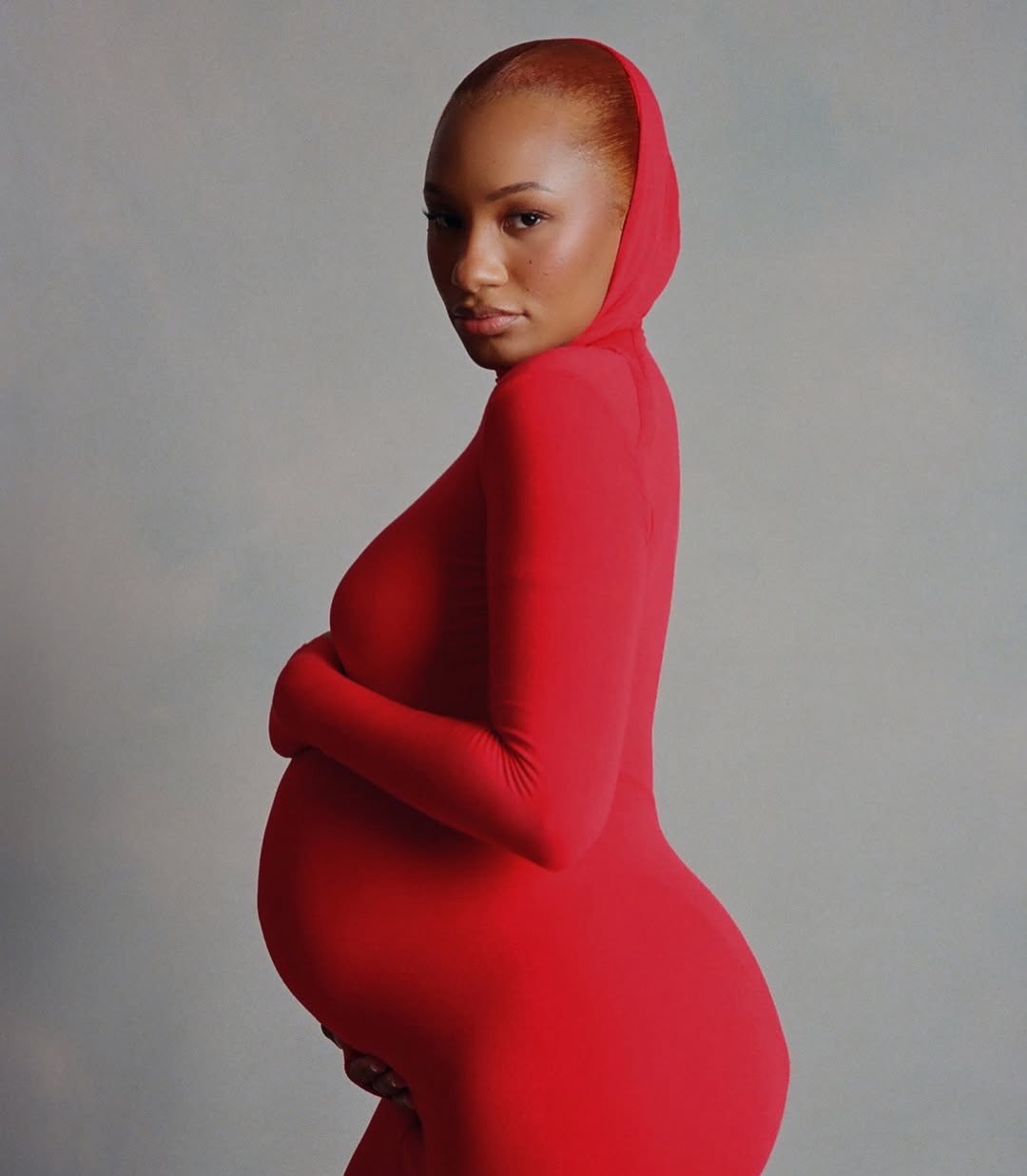

Veekee James is the perfect example of a jack of all trades—and a master of all. From being recognized as one of Africa’s top fashion designers to making waves in the gospel music scene with her hit track Olugbeja, and more recently delving into content creation and securing brand ambassadorial deals, she has mastered the act of multifaceted brilliance.
Her rise to even greater prominence came after her elaborate wedding to Femi Atere in February 2024, a spectacle that had social media buzzing for weeks. However, with fame comes scrutiny, and Veekee has found herself at the center of public debate. While some admire her drive and versatility, others believe she is doing too much. But is this criticism valid, or is she simply navigating success in her own way?
Criticism of Veekee James stems from a variety of reasons, each reflecting the ever-evolving conversation around personal branding, digital exposure, and the blurred lines between authenticity and performance.
First, there’s her transparency about her personal life—an openness that has become both her signature and a point of contention. Veekee has welcomed her audience into intimate moments of her marriage and personal journey, a move that some applaud as refreshingly candid, while others see it as excessive, bordering on oversharing.
Then, there’s the noticeable shift in her content. Once known primarily for her mastery of fashion design, Veekee’s online presence has evolved significantly post-wedding, leaning more into lifestyle and personal storytelling. For some, this rebrand is a natural progression; for others, it feels like an intentional pivot, leading to speculation that her marriage has become central to her content strategy.
And, of course, there’s the conversation around public displays of affection and luxury living. Veekee and her husband, Femi Atere, are no strangers to sharing their love story online—lavish date nights, heartfelt captions, and curated glimpses into their life together. While many admire their dynamic, others question the performative nature of it all, reigniting debates around relationship privacy and the fine line between celebration and spectacle.
But at the heart of it all lies a bigger question: in an era where social media thrives on hyper-visibility, how much is too much?
The answer, of course, depends on perspective. At the heart of the discourse lies a simple truth: whether Veekee James is doing too much is entirely subjective.
On one side of the conversation are the conservatives—those who believe in a more measured approach to public life. To them, Veekee’s transparency, especially post-wedding, feels like a calculated effort to maintain relevance in the ever-evolving digital landscape. They argue that the shift from fashion-focused content to a more personal, lifestyle-driven narrative is not just a natural evolution but a deliberate strategy—one that thrives on constant visibility, even at the risk of oversaturation. They also raise concerns about the commodification of intimacy, where life’s most sacred moments become content for mass consumption. In their view, there’s a fine line between sharing and oversharing, and Veekee is constantly toeing it.
On the other side are those who see her as a modern woman unapologetically embracing her journey in real time. To them, Veekee James is not doing too much—she is simply evolving, as any creative would. They admire her ability to navigate multiple industries, reinvent herself, and build a brand that extends beyond fashion. For this group, her openness is not a flaw but a strength, a reflection of an era where authenticity—whether meticulously curated or entirely unfiltered—is the currency of influence.
But at the core of both perspectives lies the same fundamental debate: in an age where personal branding and storytelling dominate, is there still such a thing as too much? Or are the rules simply being rewritten by those bold enough to embrace the spotlight?
As a result, Veekee James’ comment section has become a battleground of opinions—on one side, her devoted fanbase, the self-proclaimed VJ Army, fiercely defending her every move; on the other, a chorus of critics who believe she has crossed the line into overexposure. Yet, if there’s one thing that remains clear, it’s that Veekee herself is unbothered. She has openly dismissed the criticism, often responding with sharp wit and unwavering self-assurance. In one instance, she said “You cannot shame the shameless, I am 100 per cent shameless. I would be unapologetically me, anytime and any day.”
. Ultimately, whatever her motivation for shifting the focus of her content, that choice remains hers to make. In an era where personal branding and storytelling are currency, Veekee James is simply playing the game her own way.
In my opinion, the conversation around Veekee James is a reflection of a larger cultural shift—one that questions the evolving boundaries of visibility, personal branding, and self-expression in the digital age. Whether seen as a marketing genius or a case of overexposure, she remains firmly in control of her narrative, shaping her image on her own terms.
For some, she is a modern woman unafraid to embrace every facet of her life publicly, leveraging her platform to inspire and engage. For others, she is a cautionary tale of the dangers of too much visibility in an era where privacy is becoming a luxury. But love her or critique her, one thing is certain: Veekee James is who she thinks she is, and she’s not dimming her light for anyone.