Weight loss is often sold as a form of emotional transformation. The promise sits quietly underneath every gym membership, before-and-after photo, and every compliment that arrives once the body becomes smaller: your life will become easier now. It becomes tied to desirability, acceptance, and confidence.
For Lisa, a 29-year-old web designer based in Lagos, that promise didn’t come as she had expected, after losing over 30kg. The weight changed, but nothing else changed. She had spent most of her life navigating a world that had strong opinions about her body. She didn’t overfeed herself out of carelessness, genetics simply had other plans. In a culture that rarely makes that distinction, the reason did not matter.
When Your Body Becomes Your Identity
Body image in Nigeria is shaped by a specific scrutiny. People comment on women’s bodies casually no, often without even recognising it as cruelty. A woman gains weight and suddenly everyone has a theory. She must eat too much, she must have let herself go.
The possibility that weight can be genetic, hormonal, or connected to medical conditions like PCOS rarely enters the conversation. What people see is the body that has failed due to indiscipline. In Lisa’s case, it started at home.
“When my parents bought things for my sisters and couldn’t find my size, everybody just moved on from it like it was normal,” she said. “One time they bought heels for my sisters and gave me slippers, they said they didn’t see my size, but the truth was that they didn’t even ask.”
It was out of the casual logic of a family that had decided her size was a practical problem to be managed. Small moments repeated often enough eventually stopped feeling small. Over time, Lisa adjusted herself around the discomfort she believed her body caused other people. She became agreeable, helpful and easygoing.
“I felt like I needed to make myself useful and emotionally convenient enough, so people would still want me around.”
That instinct followed her into friendships, workplaces, and eventually, her relationship. In her one-year relationship, the habit of shrinking herself was already deeply ingrained. Her boyfriend worked in media and content creation, constantly surrounded by petite and curvy women who fit more easily into conventional ideas of beauty. Whenever Lisa visited him and found those women around, she felt the comparison immediately. But she knew better than to make anything out of it.
Lisa was not someone who ate excessively. She had already started restricting food heavily in the hope that losing weight would finally change the way people responded to her.
“He would look at anything I was eating and say I should stick to water. I wasn’t a big eater, but that didn’t stop him from talking. I would laugh it off, because I didn’t know what else to do.”
What hurt most wasn’t the comments themselves. It was how quickly she absorbed them. She tolerated things that should have angered her because of the belief that she needed to compensate for the body she lived in. The turning point came at a wedding.
“We were invited to a mutual friend’s wedding. He bought the aso-ebi for himself and didn’t bother to ask me. I didn’t argue, because I figured I could just wear something else.”
At the wedding, they sat with a group of friends and acquaintances in a crowded table. One of their friends noticed they were not dressed alike and casually asked why she had not sewn the fabric too. Her boyfriend answered before she could.
“He said something like, ‘Do you know how many yards her tailor would need for her? I can’t afford that kind of thing,’”
It came out the way his jokes always did, casually, in the tone of someone who had said similar things so many times, it now felt normal to him. Some people laughed, others kept eating. The conversation moved on immediately.
“I had heard him say things like that before,” she said. “But in that moment, something about hearing it said in front of other people, cracked through the normalisation I had built around the constant humiliation.”
For the first time, she stopped imagining weight loss as something she vaguely wished for, and started treating it like an urgent project. She joined accountability groups, returned to the gym consistently and purchased weight loss supplements.
“I even signed up for the Lagos marathon. The desperation I felt was real, it was as if I’d die if I didn’t lose weight as soon as possible.” Lisa said “ I didn’t have medical issues, except for the fact that I had to watch my sugar intake. But I wanted relief, I wanted people to stop.”
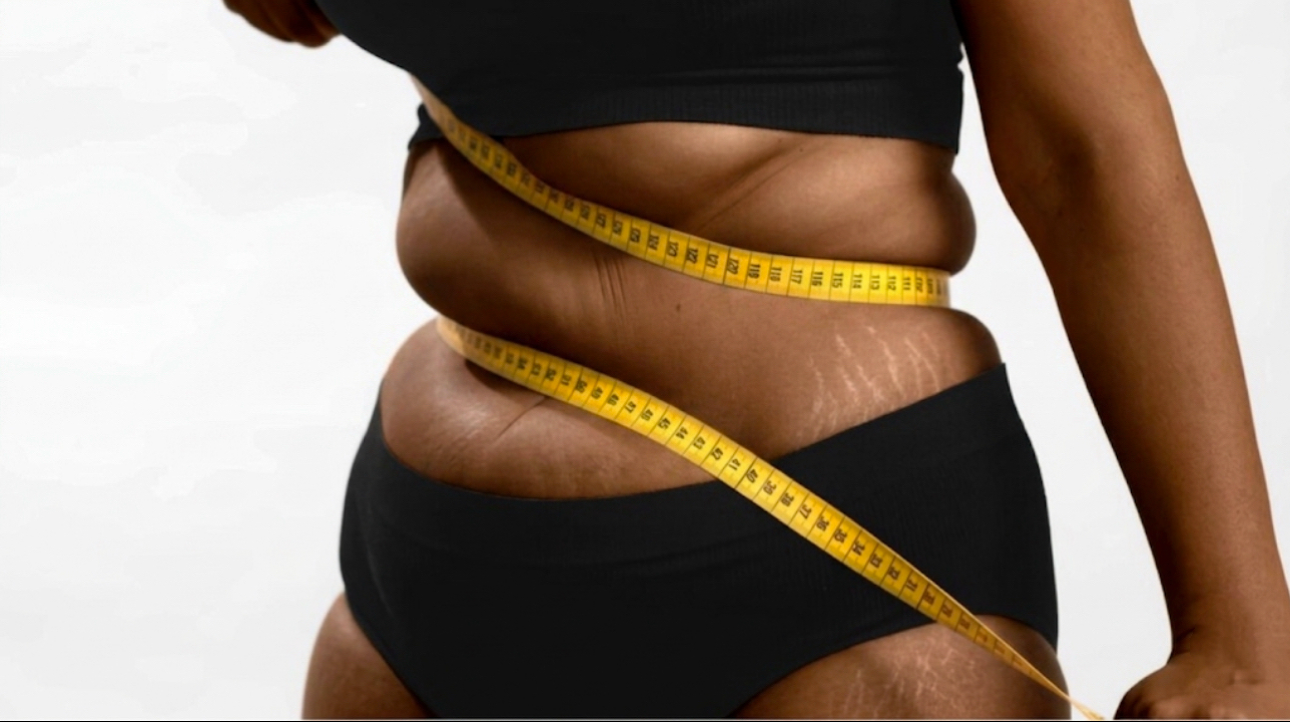
In eight months, Lisa had lost over 30kg. She went from 115kg to 82kg.
“At first I didn’t even realise how much weight I had lost,” she said. “Then my clothes started getting too big. Jeans that used to be tight suddenly needed belts.”
The transformation was visible. She looked in the mirror and saw someone she did not fully recognise. But nothing changed.
At work, they still called her Biggie. She was still the one they called when something heavy needed lifting, still the one assigned physical tasks that the men around her somehow avoided. At home, the dynamic that had been established did not update itself because her body changed.
“I was still trying to fit in, even when I already looked different. I could wear what I wanted now, and look good in it. But I felt the same.”
Her boyfriend remained dismissive. Not once did he compliment or acknowledge the work she put in. That realization forced her to confront something she had avoided for years: the performance had never really been about the weight alone. She had built the relationship around making herself easy to love and be with.
“To be honest, I wished I had lost the weight for myself, instead of people. I thought if I lost weight, I would become more confident automatically,” she said. “But I still felt anxious all the time. I still wanted everybody to approve of me.”
The weight had not been the problem. It was the story she told herself about why she was treated the way she was. Losing it removed the explanation, and what remained underneath was the insecurity. This is the part Nigerian conversations about body image hardly reach. The promise attached to weight loss rarely accounts for women who have spent years building their self-worth around their bodies.
Because when the body changes and the pain remains, something more fundamental is revealed. The seeking of validation that looked like a response to weight was actually a pattern that predated it, and the performance turns out to be a habit that does not automatically unlearn itself when the body changes.
Lisa is discovering this in real time. The first concrete step was walking out of the relationship. A decision she made while trying to rebuild a healthy relationship with her body.
“I am still figuring it out, although the feeling of not being enough is still there. But, now that I know my weight wasn’t the problem, I’m done.”
She is working on it, slowly, without a neat timeline or a guaranteed outcome. Learning the difference between who she actually is and who she learned to perform, and finding that the line between the two is not always easy to locate.