

I was sitting on the couch in my office, when a song suddenly came to mind. I picked up my phone, searched for the lyrics, and played Call My Name. Within seconds, I was back in my teenage years, when love felt adventurous and we were still learning what it meant to fall in love.
I wanted to know more about the voice behind the song and what he was up to today. What happens to the artists whose music shapes our younger years as they grow older alongside us?
Tunde Akinsami of Styl-Plus was one of those artists who taught a generation of Nigerian women to appreciate the softer side of love. Before social media and today’s dating culture, he and his bandmates sang about men who were not afraid to express their feelings, confess their love, or beg for another chance. Remember Olufunmi, Imagine That, and Call My Name? Those songs gave us a kind of romance that many of us still look back on fondly.
Today, in this Elowell Max Exclusive, we catch up with Tunde Styl-Plus to talk about the music that made him a household name, the memories attached to those classic love songs, and how his journey has evolved over the years. From the legacy of Styl-Plus to his personal growth, changing views on love, and his recent turn to gospel music, we look beyond the nostalgia to meet the man behind the songs that shaped a generation’s idea of romance.

We’ve talked for years about the music people remember, but who was Tunde Styl plus before the public knew him? What was the young man who eventually became an artist actually like?
Born into a family of five in Ibadan, before it grew to seven, I was an adventurous child who just wanted to explore and determine how things worked. I had my primary education at Staff School, University of Ibadan, where, in Primary Four, I had an encounter with my music teacher after I stumbled upon an unintended choir practice.
My parents were running late in picking me up, and so I found myself at the assembly hall where the school choir was having a rehearsal. I sang along with them, and the teacher stopped the music and said to me, “You have a unique voice. You should consider a career in music. Which, of course, I paid no mind to until later in my university days, when I met the other members of the band and then considered it a possibility.
Just before Styl-Plus hit the mainstream, I was mostly an upcoming music producer who had just recently graduated from the university and was trying my hand at writing, recording, and performing music.
See also: Sunmisola Agbebi Is Just Beyond The Normal.
When you look back at the early days of Styl-Plus, what do you think you and the other members were creating that was different from what Nigerian music sounded like at the time?
In the early days of Styl-Plus, we saw many other groups and artists as people having an idea of what they wanted to do but were not quite getting it, which was either delivering a purely international style of music or a perfect blend of local language with an international style of music.
We did lots of study on R&B, Pop music, Juju music, Highlife, and many other genres. I think we achieved the perfect blend of indigenous content with an international style of music with “Olufunmi” and an undiluted delivery of international Pop music with “Runaway.” This was just the beginning, as other songs followed afterward.
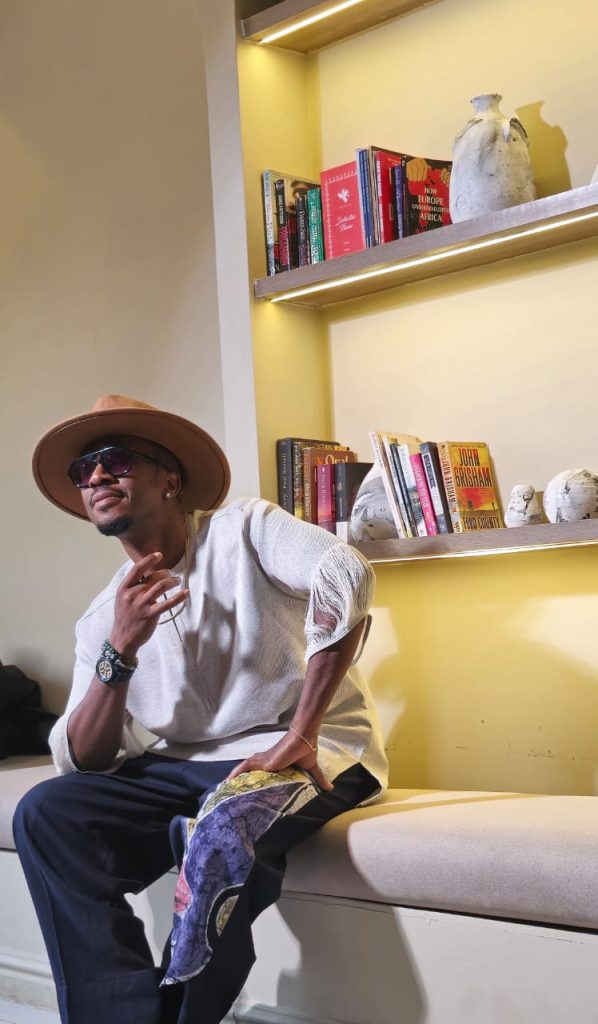
Styl-Plus emerged at a very particular moment in Nigerian music, when R&B, soul, and contemporary African sounds were just finding their place. From where you sit today, what do you think that specific generation of artists contributed to the Nigerian sound we now celebrate globally?
I think our generation played a big part in shaping what Nigerian music has become today. We came at a time when Nigerian music was changing, and there was this desire to make music that was African at its core but still contemporary and could connect with people anywhere in the world.
My own journey with Styl-Plus was a big part of that experience for me. It was a journey of learning, growing, finding my voice, and understanding what it really meant to create music with other people. Along the way, we were blending R&B, soul, African melodies, harmonies, and storytelling in our own way.
Songs like “Olufunmi,” “Imagine That,” and “Iya Basira” came from that period of our lives, and they were really about expressing what we felt and telling stories that people could relate to. I think we also showed that Nigerian music could be commercially successful and still have depth, good songwriting, and strong musicianship.
Looking at where Nigerian music is today and how far it has travelled globally, I see it as part of a journey that started long before us and has continued through different generations. The sound has changed, technology has changed, and the younger generation is doing amazing things with it, but I’m proud that Styl-Plus and the music we made are still part of that story.
For me, that’s really what music is about. Each generation taking what it has inherited, adding something of its own, and leaving something behind for the next generation.
“Olufunmi” was one of the defining songs of the Styl-Plus era, but its journey actually began with a track called “Sophia” before you reworked it and brought in more African elements. Looking back now, what do you remember about making that record, and what is it about that song that made it endure for so many years?
The creation of “Olufunmi” felt like a discovery. It felt like we found a lost key that unlocked a new dimension. It was a song originally written as “Sophia,” which was a good song, by the way, but would have lacked the cultural depth. The chorus was reworked and changed to Yoruba, my native and tribal language, in order to achieve an indigenous feel to it. “Olufunmi” was derived from my brother’s fiancée’s name at that time.
I believe what makes the song stand out is the synergy between all the creatives involved, starting from the writers, to the composers, producers, and, of course, the promoters.
In the Styl-Plus era, songs like “Olufunmi” and “Call My Name” centered on male vulnerability—men literally begging, expressing deep emotional need, and fighting for love. Today, mainstream Afrobeats often leans heavily into a highly transactional or guarded view of romance. How do you think your music shaped the romantic expectations of Nigerian women back then, and do you feel the industry today owes women that level of vulnerability again?
I think songs like “Olufunmi” and “Call My Name” came from a place of genuine emotional expression. We were not afraid to show that a man could be strong and still be vulnerable, that he could love deeply, miss someone, plead for forgiveness, and openly express how much a woman meant to him. For me, that was never a weakness; it was an honest expression of love. I believe those songs helped shape the romantic expectations of many Nigerian women by showing them that love could be expressed through tenderness, commitment, reassurance, and emotional availability. The fact that those songs are still being sung today tells me that the emotions behind them have not lost their relevance.
Every generation has its own way of expressing love, shaped by its experiences and the society around it. There is nothing wrong with confidence, independence, or even a little playful bravado in music, but I believe we must never lose the ability to express genuine emotion.
Personally, I would love to hear more music that allows men to be emotionally honest again. A man should be able to say, “I love you, I need you, I am sorry, and I want to make this work,” without feeling that he has compromised his masculinity.
Ultimately, love is not a transaction; it is a human experience. As artists, we have a responsibility to tell the full story of love, including its vulnerability, sacrifices, imperfections, and beauty. That is something I will always stand for as Tunde Styl-Plus.
There is nothing wrong with confidence, independence, or even a little playful bravado in music, but I believe we must never lose the ability to express genuine emotion.
You’ve spent a significant part of your life being associated with songs about love. Has being known for that kind of music influenced the way people expect you to behave, or changed how you understand relationships in your own personal life?
Honestly, I’m not entirely sure what people’s expectations are of me in terms of how my love songs should reflect my personal behavior. However, I believe the songs I sing are reflections of what I experience, what I feel, or what I hope to experience.
One thing I can say for sure is that every song I deliver is a genuine representation of my emotions, experiences, and state of mind at that particular time. As an artist, I sing from a place of truth, and that is what makes the music authentic to me.
You’ve spent decades singing to—and about—idealized women. But away from the stage, you’ve been shaped by the very real women in your daily life. What is the most profound truth about womanhood you’ve had to unlearn or relearn simply by paying close attention to the women who have raised, loved, or supported you?
I think one thing I’ve had to relearn is that women are much more than the inspiration behind love songs. The women in my life have taught me to listen more, assume less, and understand that love is also about patience, support, and truly seeing the person beyond what you may first notice about her.
Many of our readers at Elowell Max were teenagers when “Call My Name” dropped, and today, they are navigating boardrooms, building businesses, and raising daughters of their own. Your music serves as a time capsule for their girlhood. If you could write a sequel to one of your classic hits that speaks exactly to where those same women are in their lives right now, which song would it be, and what would the core message be?
If I were to write a sequel to “Call My Name,” I think I’d start from the simple fact that she actually did call my name. We met, we started something beautiful, and somehow, all these years later, we’re still together, building our lives and living the dreams we once talked about.
I’d call it “Castles on the Ground,” almost the opposite of “Castles in the Air.” Because “Call My Name” was about that moment when you’re hoping and wondering, “Will she call my name?” The sequel would be, “She did—and look where that call took us.”
It’s about turning those dreams and fantasies into something real.
Nigerians fiercely protect the nostalgia of the Styl-Plus era; to many, you are the permanent soundtrack of their youth. Do you ever feel the unbearable weight of that legacy? How do you balance giving people the Tunde they fell in love with, while still giving yourself permission to become someone they haven’t heard before?
The burden of being linked to the Styl-Plus legacy is real and could be overwhelming. It sometimes works in my favor and sometimes not so much. I try my best to strike a balance between being the Tunde they fell in love with by not straying too far from the sound they are used to, while sneaking in or introducing new ideas.
What has becoming older changed about the way you make music? Are there things you can express now that the younger Tunde simply didn’t have the life experience to understand? With that in mind, what does “success” mean to you today?
As I’ve grown older, like old wine, my approach to music has changed. I’m less concerned about being trendy and more interested in being real. I take more time now to research, think through the idea, and execute it properly.
I’m also more intentional about who I’m making the music for. Rather than trying to make something that appeals to everybody, I’d rather speak directly to a particular audience and give them something they can truly connect with. That’s something the younger Tunde probably wouldn’t have done.
What was your relationship with spirituality like growing up? Was faith a central part of your childhood, or did you have to unlearn and rediscover your relationship with God on your own terms to get to where you are today?
I have gone through different stages in my spiritual growth and journey. Coming from a Catholic background and then transitioning into Pentecostalism during my early childhood, I have experienced different sides of religion. Along the way, I have had to unlearn certain principles and relearn new ones.
Over time, I have come to understand that spirituality is personal and that everyone has to find their own path in pursuing it. I am still learning and growing, and I’m still striving to live in alignment with the Creator’s will and purpose for my life. Because, ultimately, I believe that outside of that, everything else is futile.
Your latest Afrogospel single, “Atobijulo” featuring Da Capo, is a massive shift from romantic R&B to divine love. Artists often make this transition following a deep personal awakening. What was the quiet realization about God—or your own life’s purpose—that made this musical pivot absolutely necessary right now?
“Atobijulo” is an expression of how I see God. I see God as bigger than all. I came to the realization that everything in existence is because of the Almighty and can only be in existence because He is everything.
I have always felt this way, and so this time around, I decided to put it into words and express it in a song.
You spent years mastering how to translate human, romantic love into massive hit records. Now that you are singing about God’s love, how does that change your creative process? Does it require a different, perhaps deeper, kind of vulnerability to sing for God than it did to sing for a commercial audience?
I have always sung about what I believe in, so for me, singing about God doesn’t necessarily require a completely different creative process. I believe God is love, and love has always been a big part of what I write about. I think the difference is really in the message and where the inspiration comes from. I see every song as a message that is meant to be shared, and I believe that inspiration ultimately comes from God. So whether I’m singing about human love or God’s love, I’m still being honest about what I feel and what I believe.
For me, the vulnerability is really the same. It’s about being genuine, putting yourself out there, and allowing people to connect with the message.