

If you have dealt with hyperpigmentation, then you already know it is persistent. It sticks around and even makes you start doubting yourself.
According to Harvard Health Publishing, hyperpigmentation can be caused by exposure to the sun; genetics, diabetes, thyroid diseases, medications, including certain antibiotics and drugs that cause increased sensitivity to the sun. Meanwhile, you should know that freckles and melasma are also types of hyperpigmentation.
How To Tackle Hyperpigmentation

Truthfully, I didn’t notice when it started. It was slow and gradual. The dark patches began to spread. The dark patches appeared around the eyes, temples, and forehead. I started to wonder if these were just breakouts or exposure to sun.
Eventually, what worked were not just the products themselves but how I used them. These five skincare therapies really transformed my skin; however, the actual change came from following a simple, consistent plan.
Let me walk you through both.

Sunscreen Became My Daily Religion
I used to treat sunscreen like an unnecessary piece of luxury. I mean, it was nice to have, but I did not consider it essential. That attitude cost me.
Hyperpigmentation is like the evidence of sun exposure. Therefore, if you are not protected, the dark spots will get darker and stay longer, and you will work against the results of every product you use. So, I committed to always having a broad-spectrum SPF 30-50 on me wherever I go, even if the sun is hiding behind the clouds. Besides that, when I was outside, I kept on reapplying my sunscreen every couple of hours. This was more than just a single step; it was the foundation for building a wholesome routine to regain an even skin tone. After I sorted the issue out, everything else began to work better.
Vitamin C Gave Me That Subtle Glow
My daytime routine was a ritual of protection and brightness.
I started using vitamin C after cleansing. Gradually, my skin became more vibrant; it was less dull and more even-toned. Though the spots didn’t magically vanish, it only softened their color and gave my skin a healthier glow.
It was as if my skin was finally catching up with the effort I was putting in.
Niacinamide Helped Me Break the Cycle
For me, the major problem was not only the dark spots but the entire cycle. Breakout, treat, repeat.
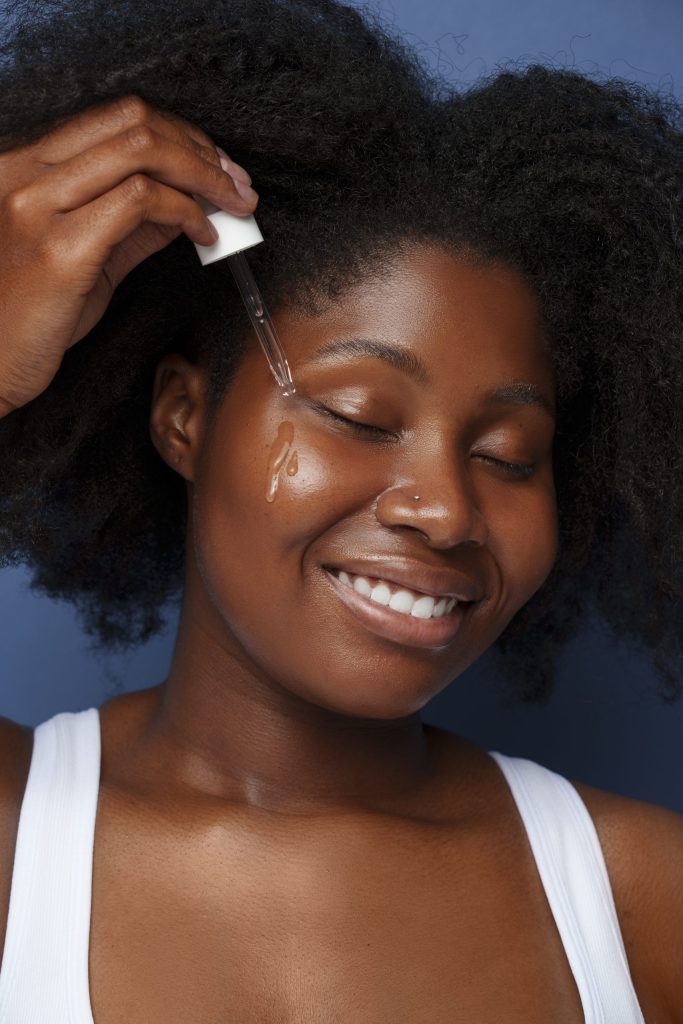
Niacinamide was the one that helped me interrupt the pattern. This ingredient helped my skin balance, calm irritation, and, in a way, gradually correct my skin tone. What I liked most was how gentle it was. No harsh reactions, just continuous and steady progress.
It’s a quiet game changer in my routine.
Read Also: How to Use Hyaluronic Acid to Fix Bleached Skin
Retinoids Did the Heavy Lifting
At night, I focused on renewal.
Retinoids didn’t give that instant glow. First, they had a few side effects like dryness and a period of trial and error. However, once my skin adapted to it, the results were truly remarkable.
The retinoids accelerated cell exfoliation, so the cells with pigment couldn’t remain on the skin for long. After a while, the skin tone became finer, clearer, and more beautiful. Initially, it was going at a slow, gradual pace, but it was work that went very deep.
Gentle Exfoliation Made Everything Work Better
I had to unlearn everything I knew about exfoliation. Excessive exfoliation would irritate my skin. If I didn’t exfoliate enough, I wouldn’t see any changes.
Discovering that the right balance means using gentle chemical exfoliators such as AHAs or BHAs a couple of times a week has had quite a significant effect. It removed the layer of dead pigmented skin cells and, at the same time, made other skincare products penetrate the skin more effectively. It was a deliberate step to improvement.
The Simple Plan That Tied It All Together
What really gave me results was following a sustainable routine, not something overwhelming.
Morning Routine:
- Gentle cleanser
- Vitamin C serum
- Niacinamide (optional layering)
- Moisturizer
- Sunscreen (SPF 30–50, always)
Night Routine:
- Cleanser
- Retinoid (a few nights a week) or azelaic acid/alpha arbutin on alternate nights
- Moisturizer
A Few Times a Week:
- Chemical exfoliation (AHA or BHA, not on retinoid nights)
And for stubborn spots:
- Targeted treatments like kojic acid or azelaic acid
- Stronger options like hydroquinone only with guidance

What also mattered in treating my hyperpigmentation was that I stopped skipping sunscreen, especially when outdoors. I also stopped using active ingredients at the same time, over-exfoliating, and I stopped expecting instant results. Because the truth is, hyperpigmentation fades on its own timeline.
The part no one really talks about is that results take time. Actually, they might not even come even in weeks or days at first.
But somewhere between consistency and patience, that’s when the real change happens. My skin didn’t transform overnight, but it got better. Slowly. Actually, that sort of progress is different. It lasts.
If you are at that stage where it looks like nothing is changing yet, don’t force it. Be consistent. Make your routine easier and protect your skin.
It’s capable of doing more than you imagine, even when you still can’t see it.