Anxiety and depression don’t always show up dramatically. The signs show up gradually and silently, so you might miss the signs.
As a Black African woman, you’re probably used to carrying many things at once. Coupled with societal expectations that it is your cross to bear. So, when your heart is racing for no reason or when getting out of bed feels like climbing Kilimanjaro, it’s obvious you are going through a lot.
But what you are experiencing might not be fatigue. You’re probably living with anxiety and depression, and you don’t know it.
You Have Everything. Why Are You Sad?
Waking up with a familiar heaviness in your chest to stare at the ceiling, already exhausted by a day that hasn’t started, is a bad sign. You deliver your tasks at work and go through your day with a smile. Yet, you can’t figure out what the problem is.
However, when you tell someone, you feel down, they say,
“You have a job; what could be worse?”
“But you have good health; why are you sad?”
And just like that, you start to doubt yourself. Maybe I’m being dramatic. Maybe I’m ungrateful.
But anxiety and depression aren’t about ingratitude. They are health conditions
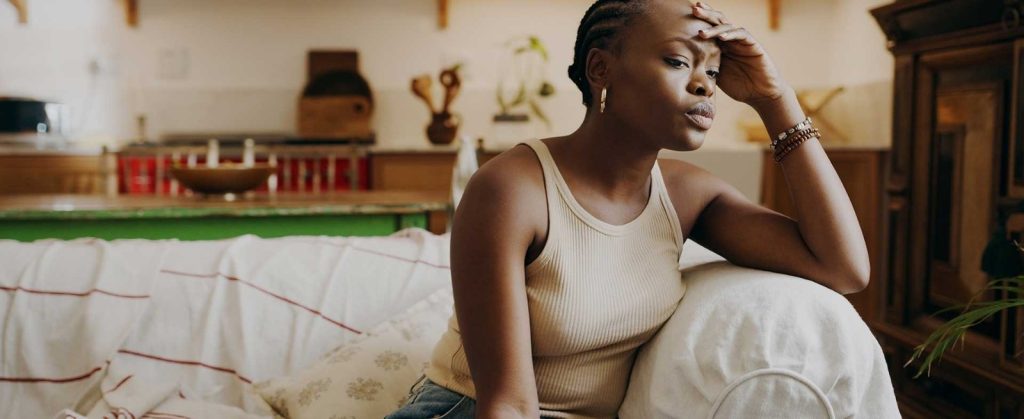
What Anxiety and Depression Can Look Like
Because many women have been trained to endure and manage, depression often gets disguised as stress. But it is beyond that.
Anxiety might look like:
- Constant overthinking, even about small things.
- Tightness in your stomach when you have to leave your comfort zone.
- A heart that beats fast for no clear reason.
- Constant feeling like something terrible is about to happen.
- Worrying about what everyone thinks about you.
Depression might look like:
- Feeling empty, numb, or heavy too often.
- Losing interest in things you used to enjoy.
- Overworking to avoid your feelings.
- Being the funny friend who cracks jokes but feels dead inside.
- Having headaches, body pains, or constant fatigue that no amount of sleep can fix.
The Strong Black African Woman Script
Many of us were raised to be strong, responsible, and composed. Respect elders. Don’t talk back. Don’t embarrass the family. Consequently, all these have stayed with us from childhood.
And so, we grow up to become:
- The eldest daughter, who everyone calls when there’s a problem.
- The friend with the listening ears and readily available advice.
- The colleague who covers shifts and picks up extra tasks.
- The church girl who serves, sings, coordinates, and encourages.
The “strong Black woman” script is passed down generations because it is often praised. So, despite struggling with anxiety or depression, women still show up and be women. A multitasker that ignores her pain.
The African Perspective
Honestly, in many African homes, when you say, “I’m losing my mind,” the first response might have spiritual connotations or something that trivializes it
As Africans, faith is a huge part of our lives, which is not wrong. However, it is very harmful to treat mental health only as a spiritual issue.
Just like you wouldn’t ignore malaria because you prayed, you don’t have to ignore anxiety and depression either. Both can be handled spiritually and medically.
How Depression Sneaks in
Depression begins when people don’t take seriously the signs their body and mind is giving. Coupled with the fact that access to professional help can be hard. Therapy is expensive in many African cities. Then there is the stigma that only mentally unstable people need therapy.
If you are constantly tired, moody, or worried excessively, it doesn’t mean you’re cursed or dramatic. It simply means something inside you needs attention and care. You don’t need to wait until you collapse before you take your mental health seriously.
How to Start Caring for Yourself
Healing won’t happen in one day. However, you can start with small, rebellious acts of self-care in a world that keeps asking you to over-function.
- It’s Okay Not to Be Okay—Start with honesty. Instead of automatically saying, “I’m fine,” it’s okay to say, “I’m not okay, but I’m coping.”
- Build a Support System—You don’t need ten people. Start with one or two you feel safe with. Your support system are people you can be honest with without being judged or told to be grateful immediately.
- Consider Therapy and Professional Help—Look for therapists who are African or culturally aware. There is a possibility that you might not like the first therapist you meet, and that’s okay. You’re allowed to try again and allow a professional to take care of you.
- Practice Everyday Coping– A short walk around your compound, stretching for five minutes every morning, and setting doable goals like putting your phone away for 30 minutes in the evening are small steps that count. They’re not insignificant; they’re coping mechanisms.
You Deserve More Than Strength. You Deserve Softness
Being a Black woman has never been easy. The society hands you the role of fixer, giver, backbone, emotional dumping ground, prayer warrior, emergency fund, and family therapist. But you are not a machine. You are a person with limits, emotions, and needs.
If life feels very dark right now or you’re struggling with thoughts that scare you, please don’t stay alone in that place. Reach out to someone you trust. Look for mental health organizations or religious leaders who actually understand mental health and won’t shame you for speaking up. You’re not less of a woman because you’re dealing with anxiety or depression. You’re not ungrateful because your heart is heavy. You deserve rest, help, softness, and room to heal.