
Dimpleplasty, the surgical creation of cheek dimples, has declared itself one of 2026’s most talked-about cosmetic trends, and people have thoughts.
Nigerian writer Oluwatoyin Ann Andrew put it plainly on X: “Fake butt. Fake boobs. Fake eye lashes. Fake nails. Fake hair. And now, FAKE DIMPLE. My gender, can we ever have enough???”
By the time the conversation reached West African timelines, women elsewhere had already gone through the full cycle: researched it, paid for it, posted the results, and moved on. But West Africa is catching up fast. Clinics in Ghana are now offering it at costs reaching GH¢38,585, and in Kenya, women are reportedly spending up to $3,500 for a single dimple on one cheek.
You may find yourself curious, skeptical, or somewhere in between, but the more interesting question is not whether women should be doing this. It is why a small indent in the cheek has held significant importance across cultures centuries before it became an easy procedure anyone with money could get.
See Also: The Economy of Looking Good: How Much Are Nigerian Women Spending For Beauty
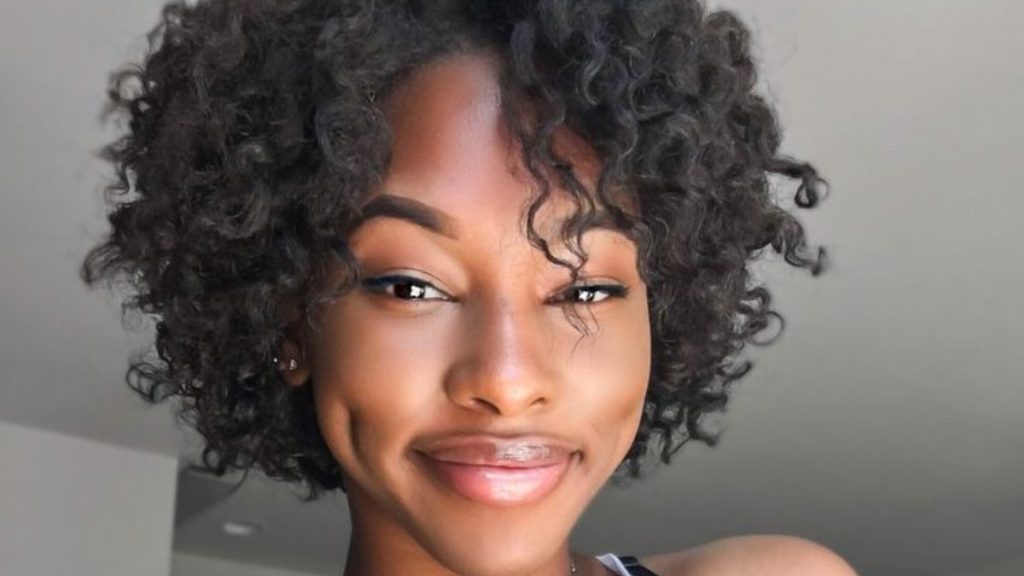
What Dimpleplasty Actually Is and How It Works
Dimpleplasty is a minimally invasive cosmetic procedure that surgically creates dimples on the cheeks. According to the American Society of Plastic Surgeons, a small incision is made on the inside of the cheek, meaning no external cuts and no visible scarring. The inner tissue is then sutured to the underlying muscle, creating a permanent indent that appears when the person smiles. The procedure takes between twenty and thirty minutes, is performed under local anaesthesia, and requires very little downtime. Most women return to normal activity the following day.
The procedure is not entirely new. It first gained attention around 2017, but it resurfaced with significant force this year when women across the United States began posting their results, pulling the conversation into African timelines shortly after.The global market for dimpleplasty was valued at over $300 million in 2022 and is projected to reach nearly $425 million by 2030.
The Science Behind Why Dimples Form in the First Place
Maxillofacial surgeon Ross Elledge, writing for BBC Science Focus, explains that dimples form because of a variation in the zygomaticus major muscle, the muscle responsible for controlling facial expressions. In most people, this muscle runs as one continuous band from the cheekbone to the corner of the mouth. In people with dimples, the muscle splits into two parts, and the gap between those parts causes the skin to pull inward when they smile.
Scientists classify this as a minor genetic defect, the result of a bifid, or split, zygomaticus major formed during embryonic development.The US National Library of Medicine describes it plainly as an anomaly of the muscle.
The feature women are now paying to have permanently placed on their faces is, biologically, an irregularity. Something the body produces when muscle development takes an unplanned turn. Ironically, we have not fallen in love with perfection. We have fallen in love with a very specific kind of imperfection.

Why Dimples Have Always Been Considered Beautiful Across Cultures
The desire for dimples is not new, and it is definitely not a Western concept.
Across cultures, cheek dimples have carried meaning. In Chinese culture, they are considered a mark of good fortune, with children born with them seen as auspicious. In Arabian culture, they signal beauty. Nigerian and Haitian mothers have historically pressed their fingers gently into newborns’ cheeks, hoping to shape them. In literature from Shakespeare to 19th century fiction, a dimpled cheek on a woman was used as shorthand for warmth, charm, and loveliness.
A study published in the Journal of Clinical and Aesthetic Dermatology confirmed that across multiple cultural traditions, dimples have historically been understood to deepen the appeal of a smile, increasing perceptions of attractiveness, sociability, and beauty.
Why Women Are Choosing to Get Dimpleplasty in 2026
The reasons women give for booking this procedure are more varied than the conversation online suggests.
According to plastic surgeon Philippe Capraro, most patients want dimples to appear cuter or more smiley. Dimples change the quality of a smile. They make it warmer, more open, more inviting. For women who have spent years feeling their smile lacks something, dimpleplasty offers a solution.
The rise of video calls, selfies, and a permanently visual online presence has also shifted how women think about their faces. A photogenic smile is something you see every day, on every screen, in every meeting. That constant visibility has made subtle facial enhancements feel less like vanity and more like intention.
There is also the appeal of choosing something small. Unlike more dramatic cosmetic procedures, dimpleplasty makes one specific change and only when you smile.Some patients have spoken about wanting a feature that draws attention toward something they love about their face rather than away from something they do not. That reframing, from concealment to enhancement, marks a genuine shift in how women are approaching cosmetic procedures in this decade.
The social media element accelerated all of this. When women began posting their results openly, they gave visibility to a desire that many had been carrying quietly for years. Seeing the outcome on faces that looked like theirs made the decision feel less abstract and more possible.
What to Consider Before Booking A Dimpleplasty
Dimples have been considered beautiful across cultures for centuries, long before they became surgically available. What is new is the choice. And like any choice that involves your face and a surgical procedure, it deserves more than a trending video before you make it.
Dimpleplasty is permanent. The results cannot simply be undone if you change your mind, and while complications are rare when performed by a qualified practitioner, they are possible. Facial nerve damage, asymmetry, and scarring are risks that exist regardless of how minor the procedure is.
If you are considering it, biology and history are on your side in one sense. You’re not chasing something arbitrary. But wanting something with good reason and being ready for something permanent are two different conversations. Both are worth having, ideally with a certified medical professional before you make the decision.