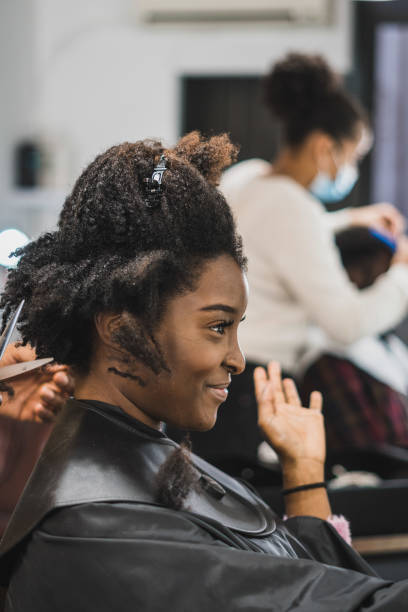
I remember when caring for our hair was almost like a cultural ritual. As a teenager, I remember how intrigued I would be whenever I saw healthy hair whether relaxed or not. I found it so fascinating that I couldn’t wait to have the means and independence to treat my hair the way I liked and wanted. I remember my mum on Saturday afternoons, which were often dedicated to washing, oiling, plaiting, or relaxing her natural hair in preparation for the new week. Some days, she would ask us to pluck some aloe vera from the backyard for her homemade hair treatment.
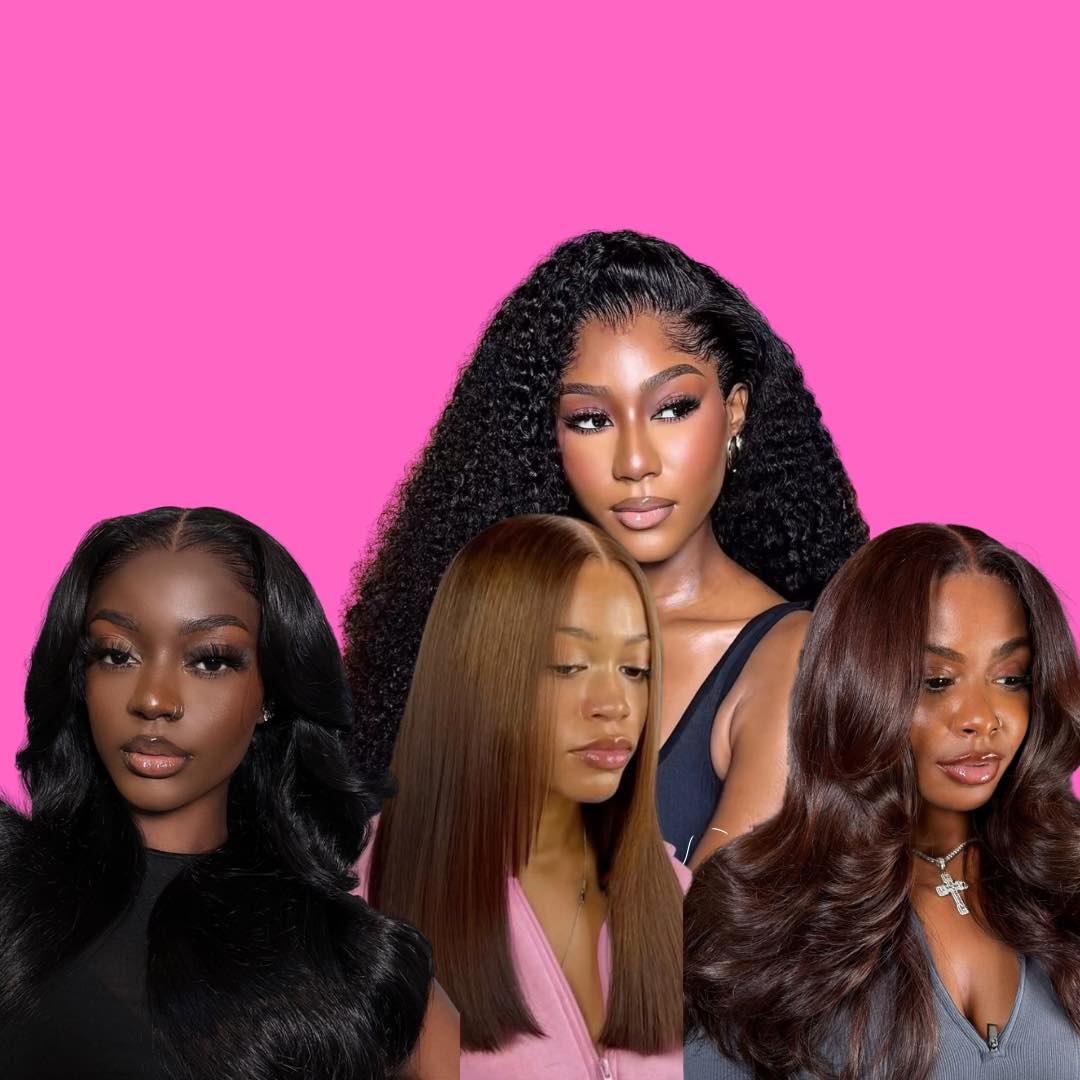
Hair salons were not left out. They buzzed with women exchanging stories under dryers, and the neatness of your braids or cornrows was a proud reflection of your identity. Today, things have changed drastically. For many women, wigs have taken main stage, while their hair plays the background role.
Again, this article isn’t about blaming wigs, because they’ve undoubtedly transformed beauty and convenience. But it’s rather questioning the overdependence on wigs, that African women can hardly turn up for an event without a wig on. The question is: is this a positive beauty evolution for African women, or a silent epidemic that has slowly weakened the culture of caring for our own hair, leaving them neglected in the shadow of convenience?”
The Rise of the Wig Era
Wigs are not new to African beauty culture. For decades, they’ve been around, often used as accessories or protective styles when women needed to rest their hair. But things are different now. The industry has grown in unimaginable ways. Today, the global wig and hair extensions market is worth billions of dollars, with Africa, and especially Nigeria, contributing significantly to that boom. If you ask me , wigs are no longer occasional add-ons; they are daily staples. This is not just mere assumptions but it Is evident in every single way.
Celebrities flaunt them, influencers market them, and everyday women rely on them to show-up without stress. In fact, the quality of wigs has become a subtle marker of wealth and class. Among celebrities, it’s not just about what brand of shoe or bag you’re wearing, the grade, length, and authenticity of your wig is now part of the conversation. Some celebrities even pay millions of naira for a single wig, not necessarily because the wig itself is worth that much, but because of the image of elevation and class it projects.
SEE ALSO: Why Is The love For Wigs At The Expense Of Our Natural Hair?
The convenience of wigs cannot be denied. They save time, prevent heat or chemical damage, and offer endless versatility. If you want a bone-straight hair today and curly waves tomorrow, you can have it, thanks to the presence of wigs. They have created versatility and beauty twerks, so profound that you can switch between different looks without a single trip to the salon. With just a few adjustments, you can step out in a new identity, effortlessly switching styles in ways our natural hair alone could never allow. Some other women also see wigs as a way of living free from the demands of constant styling.
The New Normal
The benefits of wigs are incredible and worth acknowledging; however, this much-priced convenience has come at a cost.
Wigs have shifted from being protective to becoming complete replacements. These days, it now feels almost weird to attend an event with just your neatly packed hair, even if it’s clean and healthy. In certain circles, people equate showing up without a wig to being “unfinished” or “unpresentable.” What used to be a protective style has become the main style, while our own hair is neglected beneath caps and lace frontals.
Wigs as a Measure of Class
In today’s beauty culture, the hair you wear is rarely your own. A woman’s classiness is now measured by the wig on her head. Long, silky, imported wigs are perceived as status symbols. They silently, yet saliently declare financial comfort and social relevance. Even among celebrities, conversations about net worth or taste often include the kind of wigs they wear. Today, the industry has even carved out new niches like the highly coveted “raw donor” wigs, which cost anywhere from hundreds of thousands to millions of naira.
Temi Otedola’s wedding earlier this year showed just how entrenched this mindset has become. She chose not to have her hair styled in a simple yet elegant style. Whether she used extensions or not, the absence of an obvious wig was striking. We saw her natural edges, we saw her Africanness, revealed in the choice of her hairstyle.
Like me, many people were shocked, almost in disbelief, that she would opt for such a natural look on such a high-profile day. That alone says a lot. It shows how unusual it has become for an African woman, especially one of Temi’s status, to publicly embrace her natural hair on a day as significant as her wedding day.
A Silent, yet Salient Epidemic
Let’s be clear: wigs are beautiful, versatile, and empowering. They allow women to explore different looks without permanent commitments. They’ve created an entire industry, providing jobs for hairstylists, wig makers, and entrepreneurs across Africa. They also give women with hair loss or medical challenges an option to feel confident again.
But the convenience and benefits that wigs bring have slowly metamorphosed into something else: laxity and nonchalance toward our natural hair. Wigs are no longer an occasional option but the default. Unfortunately, our real hair has been relegated to the background. Because “there’s always something to bounce back to, something lush, thick, and strand-full,” many women let their hair underneath suffer. Scalp care is ignored, our edges are left to disappear, and regular hair maintenance is now done by only a few. We call them hair-freaks.
In African cultures, our hair is a big part of our heritage. If wigs continue to overshadow our relationship with our own hair, we risk losing that connection.
Women now feel that unspoken judgment not only by their clothes or shoes, but also by the kind of wig they can afford. It has quietly become a financial burden too. With high-quality wigs costing anywhere between hundreds of thousands to millions, many women stretch their finances just to keep up with trends.
Recently, I came across a post where a certain hair brand advertised an option to pay “small-small” for wigs of choice. Out of curiosity, I checked the comments and was honestly baffled. Ordinary women, who clearly can’t afford these high-class wigs outright, were excitedly jumping at the installment plan. Now, it’s not a bad thing to want luxury — after all, every woman deserves to look good, but it becomes questionable when the same women cannot commit even half a quarter of that amount to the care of their own hair and scalp.
This pressure creates another silent epidemic: beauty that comes with hidden debt or unnecessary spending. What is sad about it is that this transcends just looking good. Rather, it’s about measuring up to societal standards and the definition of class, which are increasingly tied to wigs.
Acknowledging the Balance

In spite of all these, it would be unfair to completely demonize wigs. They’ve revolutionized beauty, allowed women to experiment, and even carved new streams of wealth for African entrepreneurs. They are, without doubt, in some obvious ways, a positive beauty evolution. The problem is not the wigs themselves, but the way we’ve allowed convenience to breed neglect and pressure.
It’s about balance. Wigs should not erase our relationship with our natural hair. They should not be the sole definition of beauty or class. They should not make a woman feel less presentable if she decides to wear her own hair out.
…..in conclusion
As African women, it’s important that we redefine what beauty means for us. Wigs should be an option, not an obligation. Our natural hair, in all its textures and forms, deserves attention, care, and pride. It should be perfectly normal, even celebrated, to show up at an event with your hair neatly styled, without fear of being dismissed as “unclassy”
The wig industry will continue to thrive, and that’s not a bad thing. But as women, we must decide whether we are embracing wigs as tools of self-expression or falling into an epidemic of overdependence.
Come to think of it, if the hair on your head never feels good enough unless it’s borrowed, then maybe, just maybe, the silent epidemic has already arrived.