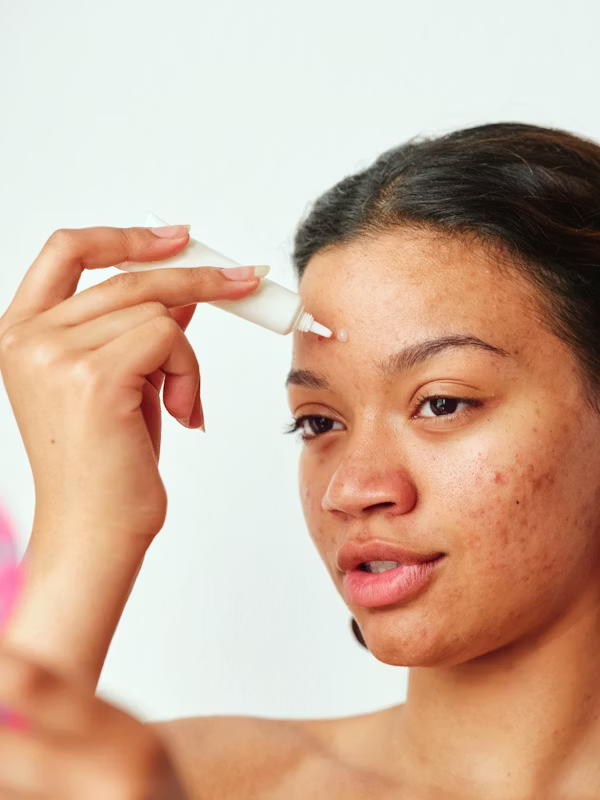

As a preteen, I struggled deeply with large, persistent pimples, and it affected my self-esteem more than I was willing to admit at the time. Back then, it didn’t feel like the worst problem in the world, or at least that’s what I told myself, because there were countless creams and treatments that promised to clear pimples and erase dark spots. So I treated my skin like an enemy, something I had to constantly wrestle with and control. I chased product after product and routine after routine, hoping to achieve what I thought was “perfect skin.” Some worked, at least temporarily. Others only made things worse.
SEE ALSO: Self-Love: Building Body Confidence Without Self-Denial
Then, to my greatest fear, I started noticing pores on my face. If you’ve ever done even a little research on pores, you’ll know that unlike pimples, they’re not something you can completely get rid of. At best, their appearance can be improved, but they can never be fully erased. In simple terms, it felt like a lifelong sentence, something I would have to live with forever.
As a Nigerian woman, I grew up in a society where celebrities were praised for flawless, radiant skin: skin that never seemed to show pimples or pores, at least not in what we saw on television or online. Naturally, I began to feel like I was never enough. I started to dislike my skin and, in many ways, myself. But if we’re honest, no one’s skin is truly perfect, not even the celebrities we admire. Human skin was never meant to be flawless. Pimples, dark spots, and pores are not defects. They are reminders that we are human, living in an imperfect world.
The problem was never my skin. It was the standard I was measuring it against.
Our today’s world is dominated by filters and edited images, what should be celebrated as normal and human is instead criticised and made to feel unbearable. What helped me push through, and eventually begin to appreciate myself, was constantly reminding myself that these so-called imperfections are part of life. The pores we see as flaws are actually proof that our skin is healthy and functioning.
SEE ALSO: How to Do Skincare in Hot Weather (Without Losing Your Mind)
Pores play an essential role in skin health. They allow oil and sweat to reach the surface, helping the skin stay balanced and protected. In other words, the very pores many of us are trying desperately to “fix” are actually signs of healthy skin. Healthy skin is not defined by the absence of pimples or imperfections. It is defined by how well the skin functions. In a world obsessed with flawlessness, choosing to accept real skin is a quiet but powerful act of freedom.
That said, while pores are natural and should be appreciated, there are still ways to keep them looking their best. he goal is not to eradicate them, but to improve their appearance. There are different ways to do this. Here are some tips that have helped me over the years.
Eating Healthy

People with more visible pores often have oily skin. Every skin type has pores, but not all are visibly noticeable. Those with oily skin types, however, tend to have more visible pores. Oily skin simply means the skin naturally produces excess oil. This isn’t a flaw, it’s just a biological difference.
Excess oil can clog pores, leading to pimples, whiteheads, blackheads, and comedones. To manage this, the body creates openings of different sizes, depending largely on genetics, to allow oil to escape. These openings are what we call pores. They exist so the skin can function properly.
Because excess oil can worsen their appearance, reducing foods that encourage overproduction can help. Junk food, overly fatty meals, and high-sugar diets have been shown over time to increase oil production, especially in people already prone to it. Eating more balanced meals can make a noticeable difference.
SEE ALSO: This Year, We’re Choosing Skincare Over Makeup
Skincare Products

If there’s one thing my excessive skincare shopping taught me, it’s that having oily and sensitive skin requires caution. You’re not only trying to solve a problem, you’re also trying not to create new ones. Below are ingredients that help refine the appearance of pores, with notes on what works best for oily skin and what’s safer for sensitive types.
Retinol
Retinol is a vitamin A–based ingredient praised for improving skin texture and refining pore appearance over time. When used correctly, it’s highly effective. However, many people report worsened breakouts or more noticeable pores after starting retinol. This usually happens because the concentration is too strong or the skin is sensitive.
Beginners should start with low concentrations, ideally between 0.1% and 0.25%. For sensitive skin types, retinol may not be ideal at all, as there are gentler alternatives with similar benefits.
SEE ALSO: 8 Reasons Your Skin Tone Keeps Fluctuating (and How to Handle It)
Bakuchiol
Bakuchiol is a plant-based alternative to retinol and is much safer for sensitive skin. While it works more slowly, it offers many of the same benefits without the irritation. For those whose skin reacts poorly to retinol, bakuchiol is a more forgiving option.
Salicylic Acid
Salicylic acid is one of the most effective ingredients for refining pores. It breaks down excess sebum, the oil that fills and stretches pores, allowing them to appear smaller over time. It penetrates deeply into the skin and helps keep pores clear.
While generally effective, not all sensitive skin tolerates it well. If breakouts worsen after consistent use, it’s best to stop. Standard concentrations are around 2%, but sensitive skin often does better with 0.5–1%, used no more than three times weekly. If it’s in a cleanser, it can be used daily as long as it’s rinsed off within two minutes.
Azelaic Acid
For those who can’t tolerate salicylic acid, azelaic acid is an excellent alternative. It helps refine pores, reduce breakouts, and fade dark spots, particularly post-inflammatory hyperpigmentation, over time. It’s generally well tolerated by sensitive skin.
SEE ALSO: Quit Bleaching? An Aesthetician’s Thorough Guide on What to Expect.
Niacinamide
Niacinamide deserves special recognition. It helps regulate oil production, strengthens the skin barrier, and improves overall skin texture. With consistent use, it significantly refines the appearance of pores.
Niacinamide can be used daily, morning and night, even by sensitive skin types. It pairs well with most ingredients. For sensitive skin, 2–5% concentrations are ideal. Starting at 10% is often unnecessary and can cause irritation.
Ultimately, this journey taught me something far more important than how to shrink pores. It taught me that skin doesn’t need to be perfect to be worthy of care, patience, and love. Sometimes, healing begins not with another product, but with changing how we see ourselves.