
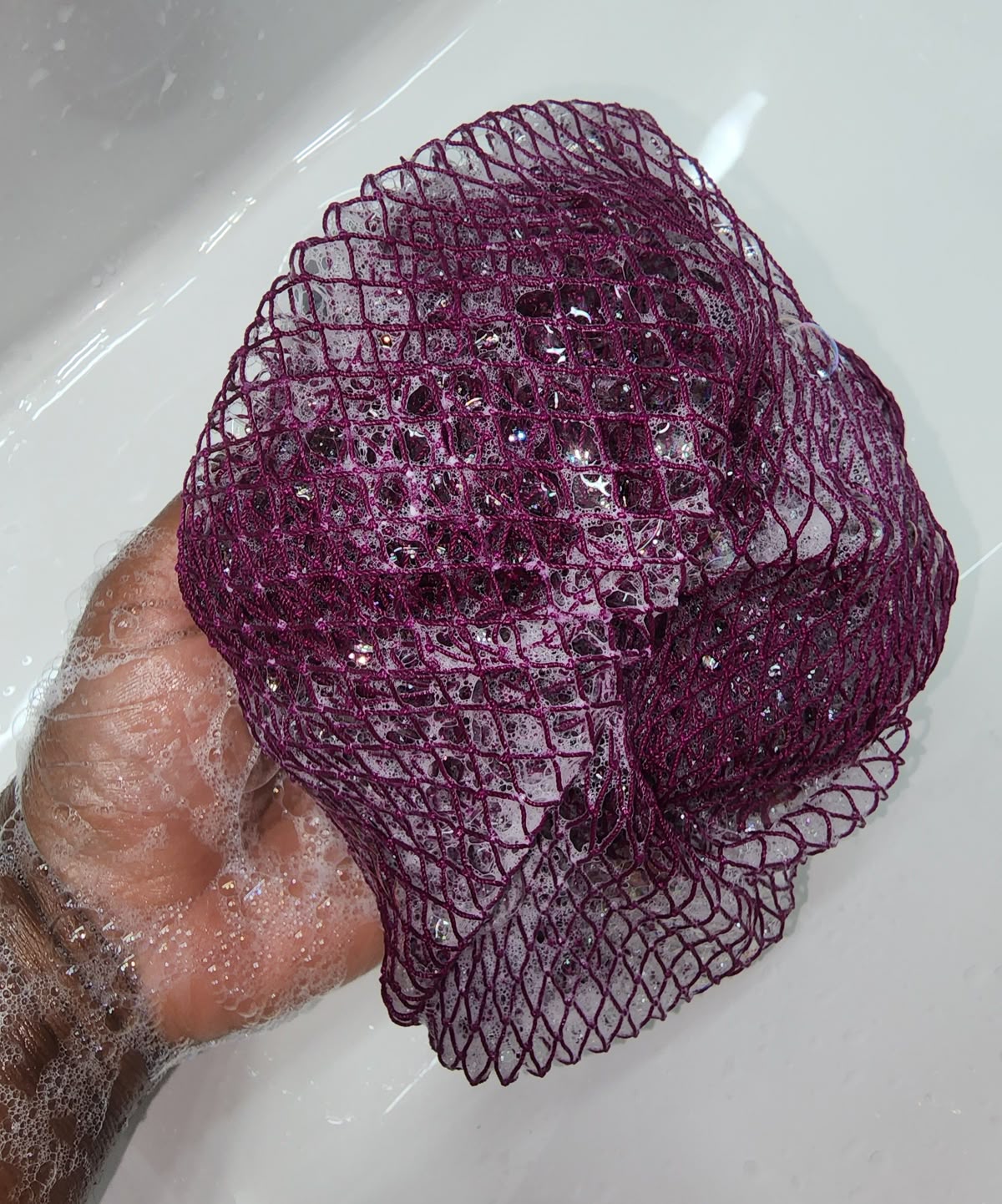
Your bathing sponge is arguably the most hardworking item in your bathroom, yet it’s often the most neglected. Whether you’re loyal to the classic loofah, a colorful mesh pouf, or the iconic African bath net (sapo), the way you treat it directly affects your skin’s health. If you’ve been dealing with unexplained body breakouts, rough patches, or an uneven tone that just won’t clear up, your sponge habits might be the silent saboteur of your skincare routine.
In 2026, we’re prioritizing skin health from the neck down. That means looking closely at what happens in the shower. Here are seven bathing sponge habits you need to ditch today, plus the smarter, skin-friendly moves to make instead.
1. Using One Sponge For Long
If you’ve had the same bathing sponge for months—or heaven forbid, years—it is time to let it go. Bath sponges are essentially “hotels” for dead skin cells, soap residue, and moisture. Over time, they become thriving breeding grounds for bacteria that cause body acne and rashes.
What to do instead: Replace your sponge regularly. Mesh sponges should be retired every 4–6 weeks, and natural loofahs every 3–4 weeks. If it has changed color, smells slightly “off,” or feels slimy, it’s not just old—it’s an occupied territory. Toss it.
2. Leaving Your Bathing Sponge in the Bathroom
Most of us rinse our sponge and hang it right back in the shower or leave it sitting on the edge of the tub. Unfortunately, bathrooms are damp, humid environments—basically a tropical vacation spot for mold and bacteria.
What to do instead: Rinse your sponge thoroughly after each use, squeeze out every drop of excess water, and hang it in a well-ventilated area. If your bathroom doesn’t have a window, try hanging it somewhere it can dry completely between uses. A dry sponge is a safe sponge.
3. Scrubbing Your Skin Harshly
There is a persistent myth that “squeaky clean” skin requires aggressive scrubbing. In reality, scrubbing too hard damages your skin barrier, creates micro-tears, and can actually lead to hyperpigmentation—especially on melanin-rich skin. You are washing your skin, not trying to scrub the “black” off the bottom of a cooking pot.
What to do instead: Use gentle, circular motions. Let the texture of the sponge do the exfoliating for you. If your skin is red or stinging after a shower, you’re doing too much. Healthy skin should feel soft, not raw.
4. Using a Sponge Every Single Day
Daily exfoliation with a sponge might feel satisfying, but it often strips your skin of the natural oils it needs to stay supple. Over time, this leads to that “ashy” look, dullness, and sensitivity.
What to do instead: Limit the “hard” scrubbing to 3–4 times a week. On the other days, give your skin a break by using your hands and a gentle moisturizing body wash. Your skin barrier needs time to recover and rebuild.
5. Using the Same Sponge on Your Face and Your… Everywhere Else
Your face and your body have completely different needs. The skin on your face is significantly thinner and more sensitive. Using your body sponge on your face transfers bacteria, oils, and heavy body products to your pores, which is a one-way ticket to Breakout City.
What to do instead: Keep the body sponge strictly for the body. For your face, stick to your hands or a soft, dedicated facial cloth. Your face is a luxury fabric; treat it like silk, not denim.
6. Ignoring the “S.O.S.” From Your Skin
If you notice new itching, tiny bumps, or dark patches, don’t just reach for a stronger soap. Often, we blame our creams or the weather while we continue to use an irritating, over-used sponge that is causing the problem.
What to do instead: Listen to your skin. If you’re feeling irritated, switch to a softer washcloth or a gentler sponge. Sometimes, the “glow” you’re looking for is hidden under a layer of skin that just needs a little less friction and a lot more moisture.
7. Thinking a Quick Rinse Counts as “Cleaning”
Rinsing your sponge with water alone isn’t enough to get rid of the soap scum and bacteria hidden deep in the fibers. It might look clean, but it’s likely not.
What to do instead: Once a week, give your sponge a “deep clean.” Soak it in hot water with a bit of antibacterial soap or a splash of white vinegar. Rinse it thoroughly and let it dry in the sun if possible. It’s like a detox for your favorite shower tool.
Elowell Max Take
Healthy skin doesn’t start with expensive serums; it starts with the tools you use every morning. Your bathing routine can either protect your skin or slowly wear it down. When you upgrade your sponge habits, you’ll notice that your body acne clears up, your skin texture gets smoother, and your moisturizers actually absorb better because they aren’t fighting through a layer of bacteria.
Good skin isn’t about “squeaky clean” friction—it’s about balance. Treat your sponge like the skincare tool it is. Clean it, replace it, and use it gently. Your skin will thank you with a long-lasting, natural radiance.