If you wear your natural Afro hair, you already understand that your hair has opinions. Some days it feels almost impossible to manage. You moisturize, style, stretch, and protect it, yet it still shrinks, tangles, frizzes, or resists cooperation entirely.
Stubborn natural hair is not bad hair. It is simply hair that is highly textured, tightly coiled, and deeply responsive. Afro hair is not meant to behave like straighter textures, and trying to force it into routines that ignore its nature often leads to frustration. What many people describe as difficult or unmanageable hair is usually hair that is misunderstood, under-hydrated, or handled too aggressively. Once care becomes intentional, everything begins to change.
First things first, understanding how to handle stubborn hair starts with unlearning harmful habits and replacing them with intentional practices that respect your hair’s structure rather than fight it.
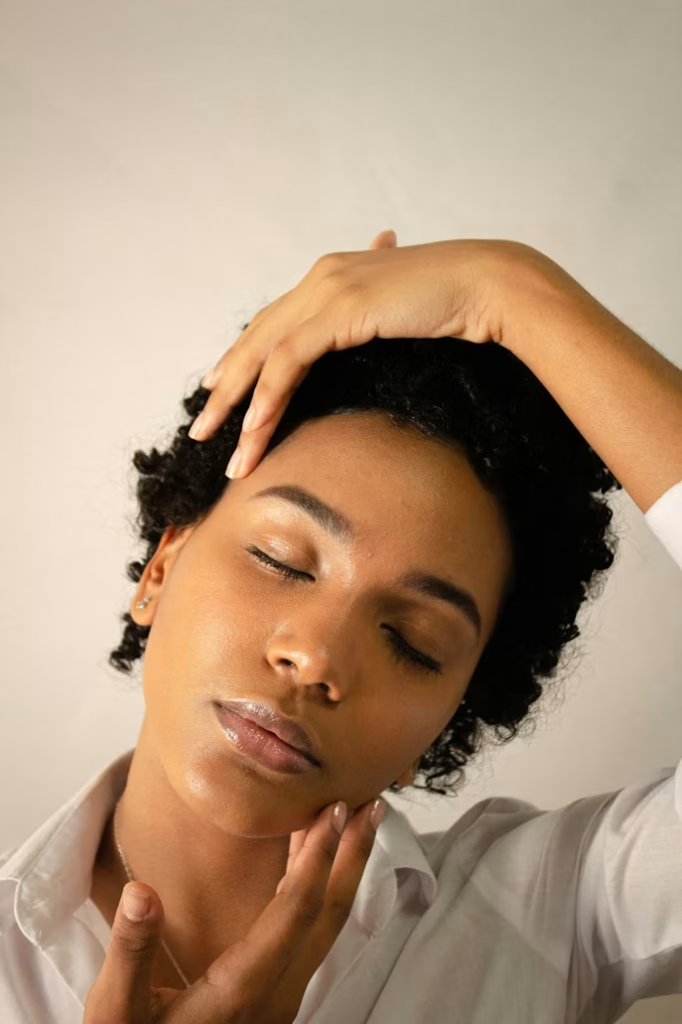
The “Stubborn Hair” Cliché We Need to Retire
What many people call stubborn hair is simply a miscommunication. Natural Afro hair does not resist care; it responds to it. When hair feels hard to manage, it is often a sign of unmet needs.
Even within the same hair type, no two heads of hair behave exactly alike. Hair has personalities. One person’s hair may crave daily hydration, while another’s thrives with heavier sealants. Some strands need layered moisture, others demand gentler handling, longer conditioning, or more frequent protective styling. Tougher textures are not problematic, they simply require more intention.
Stubbornness, in this context, is a misunderstanding. When you listen closely, adjusting moisture levels, products, and techniques—your hair softens, cooperates, and thrives. The goal is not to force compliance, but to learn what your hair responds to and meet it there.
SEE ALSO: 7 Natural Herbs For Quick and Shocking Hair Growth
Stop Detangling Your Hair Aggressively
One of the fastest ways to turn natural hair into an unmanageable nightmare is aggressive detangling. Afro hair thrives on patience, yet many people approach it with frustration, pulling, ripping, and forcing knots apart while dry or barely moisturised.
Stubborn hair is often not truly stubborn; it is tangled, dry, and reacting to rough handling. Detangling should always be done on damp hair that has been saturated with water and a slippery conditioner or detangler. Fingers should be your first tool, gently separating strands before introducing a wide-tooth comb. It is essential that you start detangling from the ends and slowly work upward. Calm down and don’t rush it.
When detangling becomes gentle and methodical, hair breakage reduces dramatically, and hair becomes far easier to manage over time.
Moisturise Properly
Many people believe oils and butters are enough to soften Afro hair, but oil without water only seals dryness into the hair shaft. Natural hair craves moisture first, and water is the foundation of that moisture.
If your hair constantly feels hard, rough, or refuses to stretch, it is most likely dehydrated. Daily or frequent hydration using water-based leave-in conditioners helps soften the hair cuticle, making styling and manipulation easier. Oils and creams should come after water to seal in that moisture, not replace it.
If you are serious about learning how to handle stubborn hair, moisture must become a non-negotiable part of your routine rather than an occasional step.
Wash Your Hair More Often Than You Think You Should
Contrary to popular belief, washing natural hair does not make it dry, poor washing techniques do. Stubborn hair often results from product buildup, dirt, and blocked hair follicles that prevent moisture from penetrating the strands.
Using a gentle, sulfate-free shampoo regularly keeps the scalp clean and allows your conditioners and treatments to work effectively. Deep conditioning after every wash restores elasticity, improves softness, and reduces breakage.
When hair is clean, hydrated, and conditioned properly, it becomes significantly easier to manage and style.
Install Protective Styles With Care
Protective styles are meant to protect the hair, not punish it. Braids, twists, and cornrows that are installed too tightly can lead to scalp pain, breakage, and thinning edges. Over time, this tension trains the hairline to retreat rather than thrive.
Stubborn hair does not respond well to forceful styling. Before installing any protective style, hair should be properly moisturised and stretched, and the scalp should feel relaxed—not sore. Protective styles should also be worn for reasonable periods and removed carefully to avoid unnecessary shedding.
SEE ALSO: How to Grow Your Hair Longer With African Threading in 2026
When done correctly, protective styling reduces daily manipulation and allows hair to retain length and softness.
Reduce Daily Manipulation and Over-Styling
Afro hair does not need to be restyled every single day. Constant combing, brushing, and reshaping disrupts curl patterns and leads to breakage, which then makes hair appear harder to manage.
Low-manipulation styles such as buns, twists, puff styles, and braid-outs allow the hair to rest while still looking polished. Giving your hair time to settle improves its overall behavior and responsiveness.
Understanding how to handle stubborn hair often means learning when to step back and allow the hair to exist without constant interference.
Sleep Like Your Hair Matters
Cotton pillowcases absorb moisture and create friction, leaving natural hair dry and tangled by morning. Sleeping without protection can undo an entire day’s worth of care.
Using satin or silk bonnets, scarves, or pillowcases preserves moisture, reduces breakage, and keeps styles intact for longer. Night-time protection is one of the simplest changes you can make, yet it has one of the biggest impacts on hair manageability.
Consistent night care trains your hair to retain softness rather than wake up combative.
Choose Products That Match Your Hair’s Density and Porosity
Not all natural hair is the same. Some hair absorbs moisture quickly but loses it just as fast, while other hair struggles to absorb moisture at all. Understanding your hair’s porosity helps you choose products that actually work.
Lightweight products may disappear into thick, dense hair without effect, while heavy products may sit on low-porosity hair and cause buildup. When products align with your hair’s needs, styling becomes easier and frustration decreases.
This knowledge is a crucial step in mastering how to handle stubborn hair without wasting money or energy.
Be Consistent. Hair Responds to Patterns
Natural hair does not reward random care. Deep conditioning once a month but neglecting daily moisture will not produce long-term results. Hair thrives on routine and repetition.
When washing, moisturising, sealing, and protective styling become consistent habits, the hair begins to soften, stretch, and cooperate naturally. Over time, what once felt stubborn becomes predictable and manageable.
Afro hair is responsive—it adapts to how it is treated.
Stop Comparing Your Hair to Other People’s Hair
Comparison quietly fuels frustration with natural hair. Seeing perfectly defined curls or elongated twist-outs online can create unrealistic expectations, especially when hair textures, densities, and porosities vary widely.
Your hair may shrink more because it is healthy. It may tangle faster because it is finer. It may require more frequent moisture because it is highly porous. None of these traits are flaws.
Once you stop forcing your hair to behave like someone else’s, you begin responding to what it actually needs.
Accept That Shrinkage Is Not the Enemy
Shrinkage is a sign of healthy, well-moisturised hair. Fighting shrinkage aggressively through heat or excessive stretching can lead to damage and dryness.
Instead of seeing shrinkage as a problem, learn to style within it. Stretching methods such as banding, twist-outs, or braid-outs offer gentle alternatives that preserve curl integrity while providing length.
When you stop fighting your hair’s natural behavior, managing it becomes significantly easier.